Zambia’s Secret Earth: Caves, Craters, and Hidden Worlds Beneath Our Feet

By Derek Mwale
There is a version of Zambia most people never see.
It is not in the open plains of the savannah.
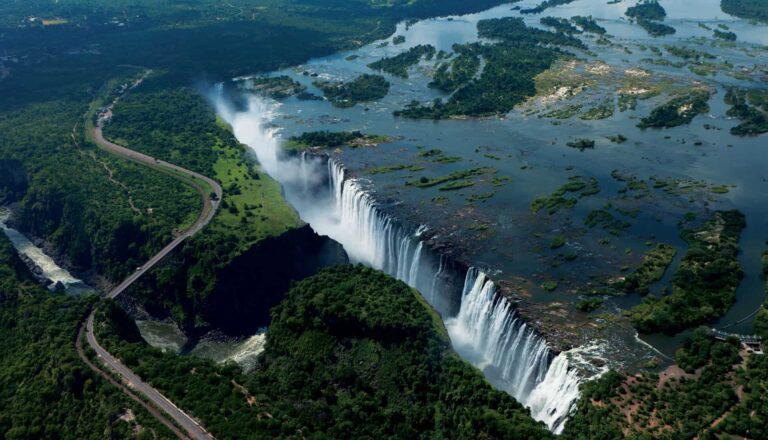
Not in the roar of Victoria Falls.
Not even in the winding silence of the Zambezi River.
It exists beneath it all.
Hidden. Quiet. Patient.
A world carved not by human hands, but by time itself—drop by drop, shift by shift, collapse by collapse. A world of caves that breathe darkness, craters that hold ancient secrets, and underground rivers that move unseen.
To explore Zambia’s secret earth is not just to travel across space. It is to travel downward—into history, into mystery, into something deeper than the surface we have grown comfortable with.
The Descent: Entering What We Do Not Understand
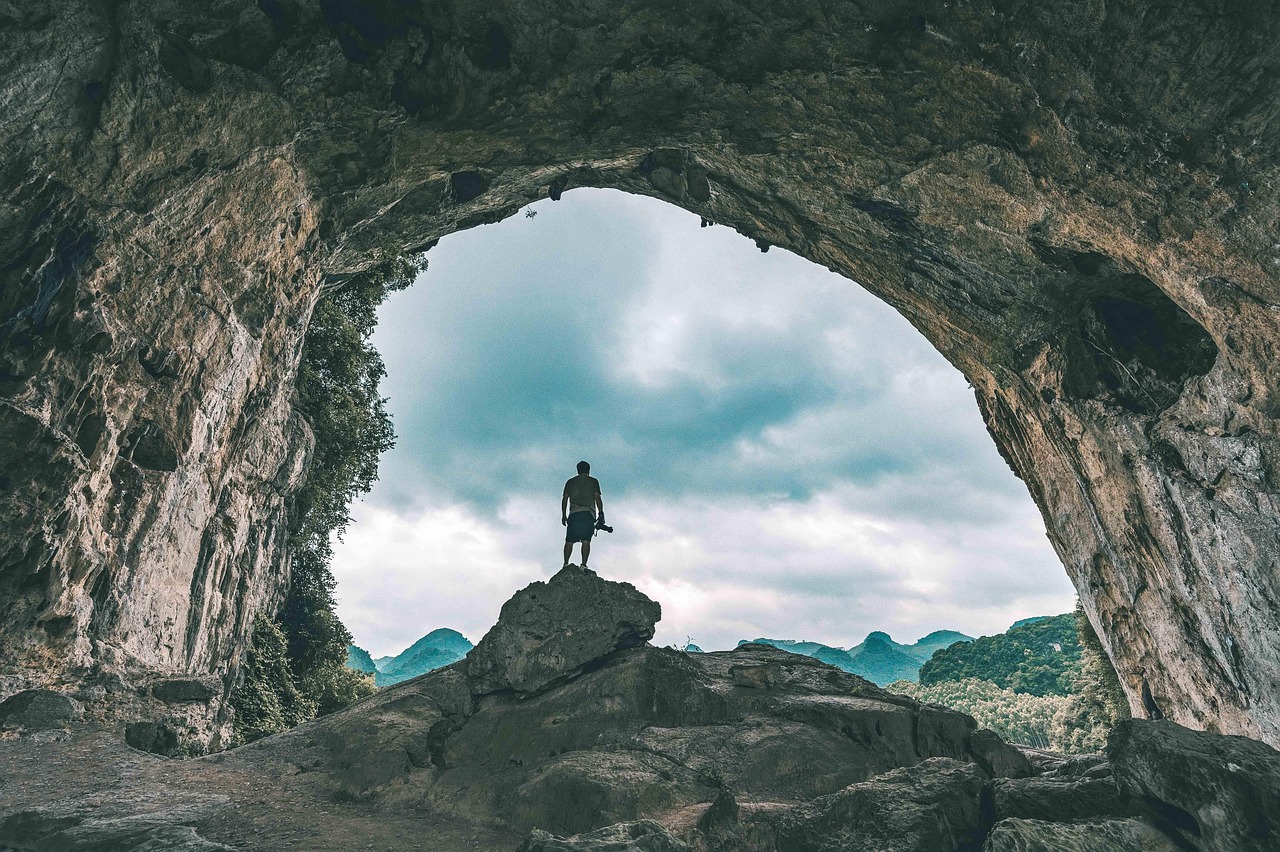
There is something instinctively human about hesitation at the mouth of a cave.
It is not fear in the traditional sense. It is something older. Something primal.
Because caves represent the unknown.
And Zambia has many of them.
Among the most haunting are the Nachikufu Caves, hidden within the wild landscapes of northern Zambia. These caves are not just geological formations—they are memory.
Inside them, archaeologists have uncovered traces of early human life—tools, art, fragments of existence that date back thousands of years.
When you step into a place like this, you are not alone.
You are surrounded by echoes.
The air feels heavier. The silence feels intentional. And every footstep seems to carry more weight than it should.
Because beneath your feet is not just ground—it is time layered upon time.
And for a moment, you are forced to confront something uncomfortable:
We are not the beginning of the story.
The Kabwe Skull: A Discovery Beneath the Surface
Sometimes, the earth does not just hide landscapes—it hides origins.
In the town of Kabwe, miners once uncovered something that would change how we understand human history: the Kabwe Skull.
This was not just a scientific discovery. It was a revelation.
A human ancestor, preserved beneath layers of earth, waiting to be found. Waiting to remind us that the ground we walk on is not just soil—it is a record.
Every step you take in Zambia is, in some way, a step over forgotten lives, ancient ecosystems, and stories that have not yet been fully told.
We often think of history as something written in books.
But in places like Kabwe, history is buried.
The Sinkholes of Wonder: Nature’s Silent Collapses
Not all hidden worlds are entered by walking forward.
Some are revealed when the earth itself gives way.
The Chinyunyu Hot Springs area is known not just for its geothermal activity, but for landscapes shaped by underground forces—where water has slowly dissolved rock beneath the surface, creating voids that sometimes collapse into dramatic sinkholes.
To stand near one is to witness absence.
A sudden, unexpected opening in the earth. A reminder that what appears solid may not be.
And that is the unsettling beauty of Zambia’s underground world—it challenges certainty.
It asks you to reconsider what you think you know about stability, permanence, and control.
Because beneath every surface lies movement.
The Kundalila Caves: Where Water Meets Stone
Near the breathtaking Kundalila Falls lies a lesser-known secret—cave systems carved by water over centuries.
Here, the relationship between water and earth becomes visible.
You can see how persistence shapes reality.
Water, soft and fluid, has carved through hard rock—not through force, but through time.
Inside these caves, the temperature drops. The light fades. And the outside world begins to feel distant.
Dripping water echoes like a slow clock. Each drop a reminder that change is constant, even when it feels invisible.
And in that quiet, something becomes clear:
The most powerful forces are often the most patient.
The Kariba Basin: A Flooded World Below
Sometimes, the hidden world is not just beneath the ground—it is beneath water.
The creation of Lake Kariba transformed an entire landscape. Villages, forests, ecosystems—all submerged beneath one of the largest man-made lakes in the world.
What lies below is not just water.
It is memory.
A drowned world, frozen in time.
Fishermen who move across the lake today are, in many ways, floating above history—above places where people once lived, where trees once stood, where life once unfolded in ways we can only imagine.
It is a different kind of underground.
One that reminds us that human progress often comes with hidden costs.
The Termite Kingdoms: Small Architects of the Earth
Not all hidden worlds are massive or dramatic.
Some are small—but no less powerful.
Across Zambia’s landscapes, termite mounds rise like miniature mountains. But what you see above ground is only a fraction of what exists below.
Termites build vast underground networks—complex, organized, efficient.
Entire civilizations beneath your feet.
These structures regulate temperature, manage airflow, and sustain entire colonies with a level of precision that rivals human engineering.
And yet, they go unnoticed.
Because we are conditioned to look at what is visible.
Zambia’s secret earth challenges that habit.
It forces you to ask: What else am I missing?
Why We Fear the Underground
There is a reason these places feel different.
The underground strips away distraction.
There are no wide horizons. No endless skies. No easy exits.
You are enclosed. Present. Aware.
And in that awareness, you begin to confront yourself.
Because the truth is, we do not just fear darkness—we fear what it reveals.
Silence. Stillness. Depth.
Things we spend most of our lives avoiding.
But in Zambia’s caves and hidden landscapes, you do not have that option.
You must sit with it.
And in doing so, you begin to understand something profound:
The underground is not empty.
It is full—of history, of life, of meaning.
The Deeper Lesson: What Lies Beneath Us
By the time you emerge from Zambia’s hidden worlds, something has changed.
You begin to see the surface differently.
A field is no longer just a field—it is layers of time.
A rock is no longer just a rock—it is compressed history.
A quiet patch of land may hold stories older than anything you have ever known.
And you begin to realize:
We live on top of something vast.
Something ancient.
Something we barely understand.
The Return to Light
Eventually, every journey underground ends the same way—you return to the surface.
The light feels brighter. The air feels lighter. The world feels… different.
But you are not the same.
Because once you have seen what lies beneath, you cannot unsee it.
You carry that awareness with you.
That beneath every step, there is depth.
That beneath every silence, there is history.
That beneath every ordinary place, there may exist something extraordinary.
So the next time you travel across Zambia—whether you are standing at Victoria Falls or walking through open land—remember this:
The real story is not always what you see.
Sometimes, the most powerful worlds are the ones hidden beneath your feet.
Waiting.
Quietly.
For you to look deeper.