
Where the Earth Breathes: Walking Zambia’s Ancient Landscapes

By Derek Mwale
There is a moment—quiet, almost invisible—when the world stops feeling like a place you are moving through and begins to feel like something alive, something watching, something breathing. You don’t notice it at first. It happens slowly. A shift in the air. A deeper silence. A kind of stillness that isn’t empty, but full.
And then it hits you:
Zambia is not just a destination.
It is an ancient presence.
To walk through Zambia’s landscapes is not to travel—it is to remember something older than memory itself.
The First Step Into Time
Most people arrive expecting beauty. And Zambia delivers it effortlessly—wide skies, endless horizons, rivers that stretch like veins across the earth. But what they don’t expect is the feeling.
Because Zambia doesn’t just show you nature.
It absorbs you into it.
Step into the bush—whether it’s the vast plains of South Luangwa, the deep woodlands of Kafue, or the raw, untamed stretches along the Zambezi—and something shifts inside you. The noise you’ve been carrying begins to fall away. The constant rush of modern life, the endless scrolling, the quiet anxiety of always needing to be somewhere else—it starts to dissolve.
Here, there is nowhere else to be.
And for the first time in a long time, that feels like enough.
The Language of Silence
Silence in the modern world is rare. It’s something we chase with noise-canceling headphones and early morning alarms. But in Zambia, silence is not something you create.
It’s something you enter.
And it is not empty.
It is layered. Alive.
Listen closely, and you’ll hear it—the rustle of leaves in the wind, the distant call of a fish eagle, the soft crunch of earth beneath your feet. These are not interruptions to silence. They are part of it.
This is the language the land speaks.
And the longer you stay, the more you begin to understand it.
You start to notice things you would normally miss. The way the light shifts as the sun moves. The subtle patterns in the sand. The tracks left behind by animals that passed long before you arrived.
Every detail tells a story.
Every step becomes a conversation.
Walking Where the Earth Remembers
There is something profoundly different about walking through a place, rather than driving through it.
In a vehicle, you observe.
On foot, you belong.
Walking safaris—one of Zambia’s most unique and powerful experiences—strip away the barrier between you and the land. There is no glass, no engine, no distance. Just you, the earth beneath your feet, and the vast, breathing world around you.
You become aware of your body in a way you haven’t in years. The rhythm of your steps. The sound of your breath. The weight of your presence.
And with that awareness comes something else:
Humility.
Because here, you are not at the top of anything. You are part of something.
The ground you walk on has been shaped over millions of years. The trees around you have stood longer than your lifetime can comprehend. The animals that move through this space do so with a kind of quiet authority—an understanding that this is their home, and always has been.
You are the visitor.
And somehow, that feels right.
The Ancient Pulse Beneath Your Feet
Zambia’s landscapes are old. Not just in years, but in spirit.
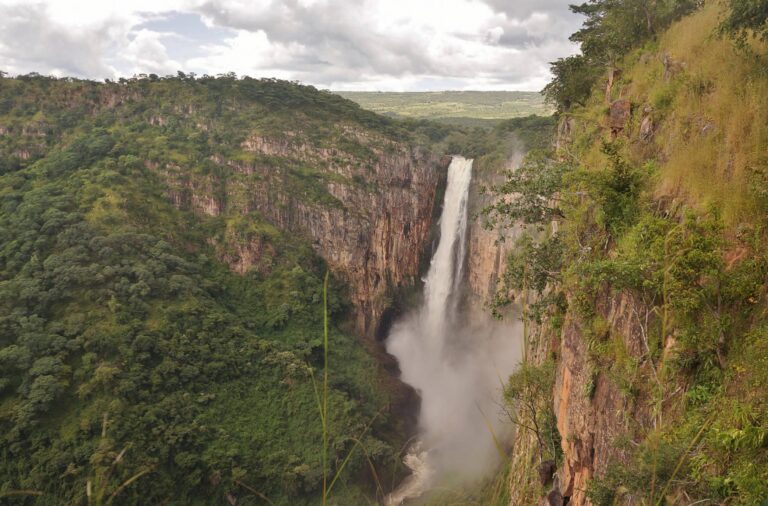
This is a land shaped by forces that existed long before human history—rivers carving their paths through rock, tectonic shifts lifting and folding the earth, seasons cycling endlessly, without urgency, without pause.
Walk long enough, and you begin to feel it—the slow, steady pulse of the land.
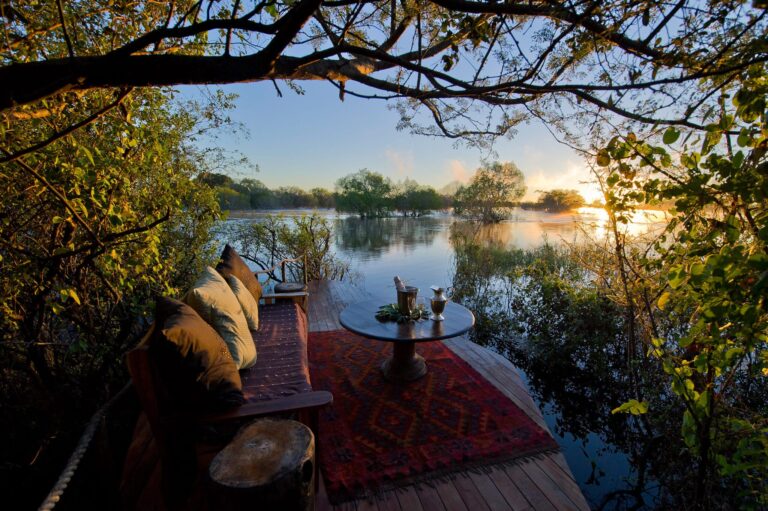
It’s in the way the Zambezi River moves—powerful, deliberate, unhurried.
It’s in the vast floodplains that stretch toward the horizon, changing with the rains like a living organism.
It’s in the forests that seem to breathe with you, inhaling the light, exhaling the shadows.
This is not a landscape that rushes.
It endures.
And in its endurance, it teaches something we often forget:
Not everything needs to be fast to be powerful.
The Illusion of Control
Modern life is built on control. We plan, we schedule, we optimize. We try to shape the world into something predictable, something manageable.
But in Zambia, control feels like an illusion.
Out here, the rules are different.
The weather changes without warning. The animals move on their own terms. The paths are not always clear, and the destination is not always certain.
And yet, instead of anxiety, there is a strange sense of peace.
Because when you stop trying to control everything, you start to experience things as they are.
You become present.
Truly present.
And in that presence, something shifts.
You realize that life is not something to be managed.
It is something to be lived.
Encounters That Stay With You
There are moments in Zambia that don’t leave you.
A herd of elephants crossing your path, moving with a quiet strength that feels almost spiritual.
A lion resting in the shade, its presence both calm and overwhelming.
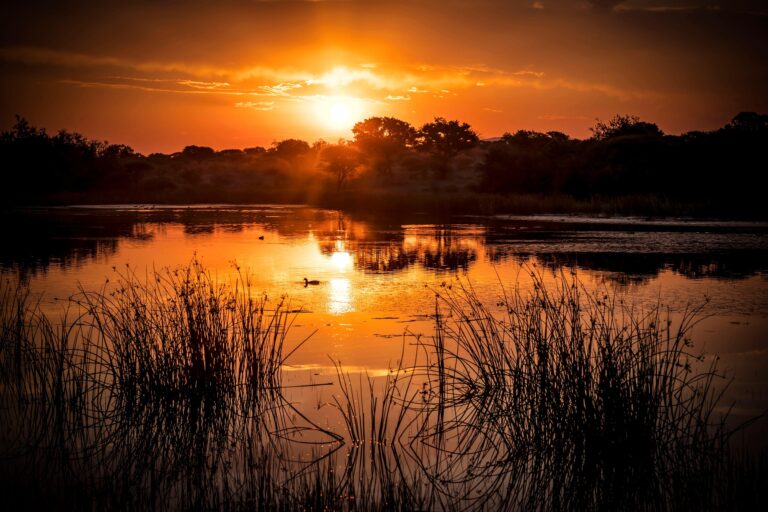
A sunset that seems to set the entire sky on fire, painting the world in colors that don’t feel real.
But it’s not just the visuals that stay with you.
It’s the feeling.
The sense of being small, yet connected.
The awareness that you are part of something vast, something ancient, something that exists far beyond your own life.
These moments don’t shout.
They linger.
And long after you’ve left, they return to you—in quiet moments, in unexpected ways—reminding you of something you felt, even if you can’t fully explain it.
The Beauty of Being Unseen
In a world where everything is shared, posted, and documented, there is something deeply powerful about experiences that are just yours.
In Zambia, there are places where you can walk for hours and not see another person. No crowds. No noise. No distractions.
Just you and the land.
And in those moments, something rare happens:
You disappear.
Not in a negative way, but in a freeing one.
You are no longer performing, no longer presenting, no longer trying to capture the perfect moment.
You are simply there.
And that is enough.
What the Land Teaches You
Zambia doesn’t teach through words.
It teaches through experience.
It shows you the value of patience, through landscapes that have taken millions of years to form.
It shows you the power of balance, through ecosystems where every element plays a role.
It shows you the beauty of simplicity, through moments that require nothing more than your presence.
But perhaps the most important lesson is this:
You don’t need as much as you think you do.
Out here, stripped of distractions, you begin to see what truly matters. Connection. Presence. Experience.
Things that cannot be bought, only lived.
Leaving, But Not Really
Eventually, you leave.
You return to the roads, the cities, the noise, the constant motion of modern life.
But something is different.
You carry Zambia with you.
Not as a memory, but as a feeling.
A quiet reminder that there is a place where the earth still breathes, where time moves differently, where life exists in its raw, unfiltered form.
And once you’ve felt it, you can’t unfeel it.
Because Zambia doesn’t just show you the world.
It shows you yourself—stripped back, grounded, present.
The Invitation
Not everyone is ready for this kind of experience.
Because it requires something most of us are not used to:
Slowing down.
Letting go.
Being present.
But for those who are willing, Zambia offers something rare.
Not just beauty.
Not just adventure.
But something deeper.
A connection.
To the land.
To the moment.
To something ancient, something real, something that has been here long before us—and will remain long after we are gone.
So if you ever find yourself standing at the edge of the wild, wondering whether to take that first step…
Take it.
Walk slowly.
Listen carefully.
And let the earth breathe beneath your feet.
Because in Zambia, it does.
And if you’re quiet enough…
You just might feel it breathe through you too.