
Predators, Prey, and Balance: The Unseen Drama of Zambia’s Ecosystems

By Derek Mwale
There is a story unfolding in Zambia every second.
You won’t hear it announced. There is no narrator, no soundtrack, no dramatic voice guiding you through it. It happens quietly, relentlessly, beneath the surface of what most people see.
To the untrained eye, the bush looks peaceful.
Golden grass swaying in the wind.
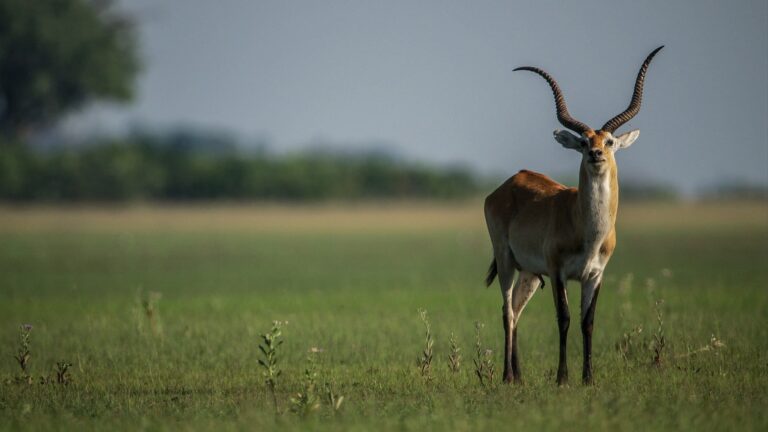
A herd of antelope grazing under the open sky.
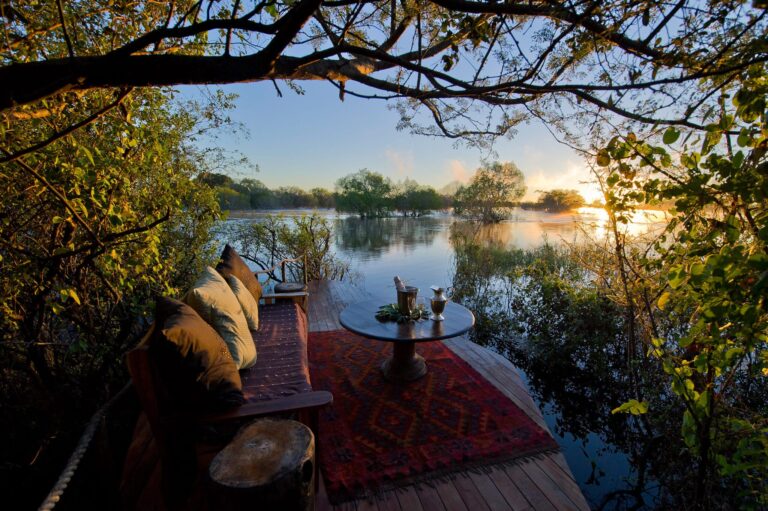
A river moving slowly, reflecting the soft light of the afternoon.
It feels calm.
But it is not calm.
It is alive with tension.
Because beneath that stillness lies a delicate, invisible drama—one that has been playing out for millions of years. A constant negotiation between life and death. Between survival and surrender.
Between predator and prey.
The Illusion of Peace
When you first enter places like South Luangwa National Park or Kafue National Park, it’s easy to be deceived.
Everything feels… still.
Animals move slowly. The landscape stretches endlessly. There is no obvious chaos, no visible struggle.
But that’s because the real story is not always visible.
It exists in the pauses.
In the spaces between movement.
In the awareness that every animal carries, every second of every day.
Because out here, nothing is ever truly at rest.
The Weight of Being Watched
For prey, life is a constant calculation.
Every step matters.
A slight misjudgment—a moment of distraction, a shift in the wind, a sound ignored—can mean the difference between life and death.
An impala grazing in the open is not just eating.
It is listening.
It is watching.
It is calculating.
Its ears flick at the smallest sound. Its muscles remain ready, even in stillness. Its eyes scan the horizon, searching for movement, for shadows, for anything that doesn’t belong.
Because somewhere nearby, there is always the possibility of a predator.
And that possibility shapes everything.
The Silent Hunters
Predators do not announce themselves.
They do not chase recklessly, driven by chaos or anger. They are patient. Precise. Calculated.
A lion resting under a tree is not lazy.
It is conserving energy.
Because hunting is expensive. It requires strength, coordination, and perfect timing. A failed attempt is not just a missed opportunity—it is wasted energy, a risk that cannot be taken lightly.
So predators wait.
They observe.
They become part of the landscape, blending into the grass, the shadows, the silence.
And when the moment comes, it is sudden.
Explosive.
A burst of movement that shatters the stillness.
But even then, success is not guaranteed.
Most hunts fail.
And in that failure, the balance is preserved.
The Role of Fear
Fear is often seen as something negative—something to overcome, something that holds us back.
But in Zambia’s ecosystems, fear is essential.
It shapes behavior.
It keeps prey alert, moving, adapting. It prevents overgrazing, forcing herds to shift, to spread out, to avoid becoming easy targets.
Fear creates movement.
And movement creates balance.
Without predators, prey populations would grow unchecked. Vegetation would be overconsumed. The entire system would begin to collapse under its own weight.
So fear, in this context, is not the enemy.
It is part of the design.
Death as a Necessity
It’s difficult, at first, to accept the role of death in this system.
To watch a hunt unfold. To see the struggle, the resistance, the inevitable outcome.
It feels harsh.
Unforgiving.
But the bush does not operate on emotion.
It operates on necessity.
A successful hunt means survival—not just for the predator, but for its offspring, its pride, its future. It means energy transferred, life sustained.
And the death of one becomes the continuation of another.
It is not cruelty.
It is continuity.
The Scavengers and the Clean-Up Crew
The story does not end with the kill.
In fact, it expands.
Once a predator has fed, others arrive. Hyenas, vultures, jackals—each playing their role in the system. Nothing is wasted. Every part of the carcass is consumed, broken down, returned to the earth.
What remains feeds the soil.
And from that soil, new life grows.
Grass. Plants. The very food that sustains the prey.
The cycle continues.
Unbroken.
The River as a Lifeline
Water is the thread that ties everything together.
Rivers like the Zambezi River and the Luangwa are not just features of the landscape—they are lifelines.
They dictate movement. They shape migration patterns. They determine where animals gather, where predators hunt, where life concentrates.
During the dry season, water becomes scarce.
And scarcity brings tension.
Animals are drawn to the same limited resources. Prey must drink, even when it is dangerous. Predators know this. They wait.
The river becomes a stage.
And the drama intensifies.
Balance Is Not Static
It’s easy to think of balance as something fixed—a steady state where everything remains equal.
But in Zambia’s ecosystems, balance is dynamic.
It shifts.
Rainfall changes. Seasons move. Populations rise and fall. Predators adapt. Prey evolve.
There is no permanent equilibrium.
Only constant adjustment.
And that is what keeps the system alive.
Because true balance is not about stillness.
It is about movement.
Human Presence in the Equation
For thousands of years, these ecosystems functioned without human interference.
But today, humans are part of the equation.
Conservation efforts, tourism, land management—all influence the balance. Done correctly, they support it. Done poorly, they disrupt it.
Zambia has become one of the places where this balance is being carefully protected.
National parks, conservation areas, and community-driven initiatives work to maintain the integrity of these ecosystems. To ensure that predators remain, that prey populations are healthy, that the land continues to function as it has for generations.
Because once this balance is lost, it is not easily restored.
What We Can Learn
There is something deeply instructive about this unseen drama.
Because it reflects truths that extend beyond the bush.
Life is not static.
Balance requires tension.
Growth often comes from challenge, not comfort.
Predators and prey are not enemies in the way we often think.
They are partners in a system that depends on both.
Remove one, and the other cannot exist in the same way.
It is a relationship built not on harmony, but on necessity.
And somehow, within that necessity, there is a kind of order.
The Beauty Within the Brutality
It would be easy to focus only on the harshness.
To see the struggle, the death, the constant pressure of survival, and conclude that the system is cruel.
But that would be incomplete.
Because there is also beauty.
In the precision of a hunt.
In the awareness of a grazing herd.
In the way every element fits into the larger whole.
It is not a gentle beauty.
It is a real one.
The Unseen, Always Present
Most of this drama goes unnoticed.
Visitors may spend days in the bush and see only glimpses of it—a distant chase, a fleeting moment of tension.
But even when it is not visible, it is always there.
In every movement.
In every pause.
In every breath taken by every living thing.
The unseen is what shapes the seen.
The Invitation
To truly understand Zambia’s ecosystems, you have to look beyond the surface.
Beyond the beauty.
Beyond the calm.
You have to recognize the complexity, the tension, the constant interplay between forces that seem opposed, but are deeply connected.
Predators and prey.
Life and death.
Growth and decay.
All part of the same story.
And once you see it—once you understand that the peace you observe is built on a foundation of constant movement, constant negotiation—you begin to appreciate it differently.
Not as a simple landscape.
But as a living system.
Breathing. Adjusting. Enduring.
So the next time you find yourself in the Zambian bush, watching a herd graze under the fading light, take a moment.
Look closer.
Listen deeper.
Because somewhere, just beyond what you can see, the story continues.
Unseen.
Unfolding.
Unstoppable.
And in that unseen drama lies the true magic of Zambia’s wild.