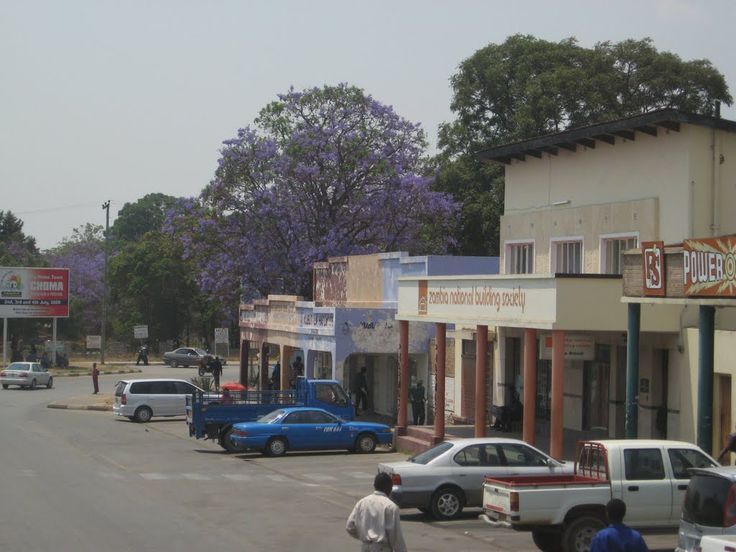

Why Kapiri Mposhi Is One of Zambia’s Most Important Towns

By Derek Mwale
There are towns you visit because they promise something—beauty, excitement, escape. And then there are towns that matter, whether or not they try to impress you.
Kapiri Mposhi is one of those towns.
It does not compete for attention. It does not present itself as extraordinary. There are no dramatic skylines, no curated tourist experiences designed to hold your gaze. At first glance, it feels ordinary—functional, even forgettable to the untrained eye.
But that is exactly what makes it powerful.
Because some places are not designed to be seen. They are designed to make everything else work.
Kapiri Mposhi is one of the most important towns in Zambia not because of what it shows you, but because of what it quietly enables.
The Town You Cannot Avoid
In Zambia, distance is not an abstract concept—it is lived reality. Moving from one province to another, from one city to the next, requires intention, time, and coordination. And somewhere within that movement, many journeys intersect.
That intersection often leads to Kapiri Mposhi.
Positioned strategically between major regions, the town has become a natural convergence point. Whether you are traveling from Lusaka to the Copperbelt, or moving across central routes, there is a high chance your path will bring you here.
And when a place becomes unavoidable, it becomes important.
Not because it demands attention—but because it earns relevance through necessity.
Kapiri Mposhi is not built on hype. It is built on function.
The Backbone of Connection
If you look at a map, you will see lines—roads stretching across provinces, railways cutting through landscapes, routes connecting cities and borders. These lines are not just infrastructure; they are lifelines.
Kapiri Mposhi sits at the meeting point of these lifelines.
The presence of the TAZARA Railway alone elevates the town beyond a simple roadside stop. This railway, linking Zambia to Tanzania and extending access to the port of Dar es Salaam, transforms Kapiri Mposhi into a gateway—not just within Zambia, but beyond it.
It becomes a point where local movement connects to regional and international trade.
But it is not just the railway.
Road networks converge here, bringing buses, trucks, and private vehicles into a shared space of transition. Goods move through. People pass by. Routes intersect. And within that constant flow, Kapiri Mposhi becomes something more than a location—it becomes a system.
A backbone of connection.
Where the Economy Breathes
We often think of economies as something that happens in cities—offices, factories, markets. But there is another layer to economic activity that exists in motion.
Kapiri Mposhi lives in that layer.
Every time a bus stops, an economy forms. Passengers buy food. Drivers refuel. Vendors sell quick meals. Small businesses capture moments of demand that exist only because movement has paused.
It is not a static economy—it is a flowing one.
The town thrives not because people stay, but because people pass through. It captures value from movement itself. And in doing so, it sustains livelihoods, supports small enterprises, and contributes to the broader economic ecosystem of the country.
This is a different kind of importance.
It is not measured by skyscrapers or GDP figures alone, but by the consistency of everyday transactions that keep life moving.
The Power of Being in Between
There is something unique about places that exist between destinations.
They are not defined by where they start or where they end, but by the transitions they facilitate.
Kapiri Mposhi exists in this in-between space.
It is where journeys pause, even briefly. Where decisions are made—whether to continue, to rest, to change direction. Where travelers recalibrate before moving forward.
And in that pause, something subtle happens.
You become aware of movement itself.
You notice the rhythm of travel—the urgency, the waiting, the coordination. You see how interconnected everything is. How one delayed bus affects another. How one route feeds into another.
Kapiri Mposhi reveals the hidden structure of travel.
It shows you that movement is not random—it is organized, interconnected, and dependent on key points like this.
A Town Shaped by Motion
What does it mean to live in a place where most people are not staying?
In Kapiri Mposhi, life adapts to movement.
Businesses are designed for speed and efficiency. Food is prepared to be served quickly. Services are built around short interactions. Time is measured not just in hours, but in arrivals and departures.
There is a constant awareness of flow.
People come. People go. And the town continues to function within that rhythm.
This creates a unique identity—one that is not rooted in stillness, but in motion.
Kapiri Mposhi is not defined by permanence. It is defined by continuity.
The Quiet Role in National Development
Importance is not always loud.
Some of the most critical systems in a country operate without drawing attention to themselves. They work in the background, ensuring that everything else can function smoothly.
Kapiri Mposhi is part of that background.
Its role in connecting regions, facilitating trade, and supporting transport networks makes it essential to Zambia’s development. Goods moving across the country often pass through or near this town. Supply chains depend on its connectivity. Travel networks rely on its position.
Without places like Kapiri Mposhi, movement becomes fragmented.
And when movement becomes fragmented, development slows.
This is why transport hubs are so important. They reduce friction. They create efficiency. They allow systems to operate at scale.
Kapiri Mposhi does all of this—quietly.
The Human Element
Beyond infrastructure and economics, there is something deeply human about Kapiri Mposhi.
It is a place of encounters.
People from different parts of the country—and sometimes beyond—cross paths here. Conversations happen between strangers. Stories are exchanged, even if briefly. Lives intersect in small but meaningful ways.
These interactions may be short, but they reflect something larger—the interconnectedness of people.
In a world that often feels divided by distance, places like Kapiri Mposhi remind us that connection is always happening, even in the most ordinary settings.
The Town That Makes Journeys Possible
It is easy to celebrate destinations.
Cities with attractions. Landscapes with beauty. Places that give you something to remember.
But what about the places that make those destinations accessible?
What about the towns that sit quietly at the center of networks, ensuring that movement continues, that connections remain intact, that journeys do not break?
Kapiri Mposhi is one of those towns.
It does not ask to be admired.
It does not need recognition to prove its worth.
Its importance is built into the system itself.
Seeing What Matters
To truly understand why Kapiri Mposhi is one of Zambia’s most important towns, you have to shift your perspective.
You have to look beyond appearances.
You have to see value not just in what is visible, but in what is functional.
You have to recognize that importance is not always about standing out—it is often about holding things together.
Kapiri Mposhi holds things together.
It connects regions. It supports movement. It enables trade. It sustains small economies. It brings people into contact with each other.
It is a town that exists not for itself, but for the network it serves.
The Quiet Truth
There is a quiet truth about places like Kapiri Mposhi:
They matter more than they seem.
Because without them, the system breaks.
Journeys become harder. Trade becomes slower. Connections weaken.
And the invisible structure that holds everything together begins to unravel.
Kapiri Mposhi stands as a reminder that importance is not always about visibility. Sometimes, it is about position. About function. About being exactly where you are needed, even if no one stops to acknowledge it.
In the end, Kapiri Mposhi is not just a town.
It is a connector.
A facilitator.
A silent engine behind movement.
And in a country defined by distance and driven by connection, that makes it not just important—
but essential.