
The Role of Kapiri Mposhi in Zambia’s Logistics and Trade

By Derek Mwale
There are places that produce.
And then there are places that make production possible.
Kapiri Mposhi belongs to the second category.
It does not mine copper.
It does not manufacture goods at scale.
It does not dominate headlines as a financial center.
And yet, without it—and places like it—much of Zambia’s economic activity would slow down, fragment, or become inefficient.
Because in the architecture of trade and logistics, value is not only created at the point of production.
It is sustained in movement.
The Geography of Trade
Zambia is a landlocked country.
That single fact shapes everything.
It means exports must travel long distances before reaching international markets. It means imports must pass through multiple layers of transport before arriving at their final destinations. It means that logistics is not a supporting function—it is a central pillar of the economy.
And within this system, certain locations become critical.
Kapiri Mposhi is one of them.
Its position within the country allows it to act as a connector between key regions—the Copperbelt, Lusaka, Central Province, and beyond. But more importantly, it connects Zambia internally while also linking it externally through transport corridors that extend across borders.
This dual function is what gives it strategic weight.
The Rail Advantage
At the center of Kapiri Mposhi’s logistical importance is its connection to the TAZARA Railway.
Rail transport operates differently from road transport.
It is slower in some respects, but more efficient for bulk goods. It reduces the cost per unit over long distances. It allows for the movement of commodities at scale—minerals, agricultural products, fuel, and industrial materials.
For a country like Zambia, which relies heavily on exporting raw materials and importing manufactured goods, rail is not optional.
It is essential.
Kapiri Mposhi serves as a key node in this railway system. It is where cargo can be organized, redirected, and integrated into broader supply chains. It acts as a logistical hinge—connecting inland production zones to international trade routes that lead to ports like Dar es Salaam.
Without such nodes, rail networks become less effective. They require points of coordination—places where goods can be transferred, stored, and managed.
Kapiri Mposhi provides that function.
The Road Network Layer
While rail handles bulk movement, roads handle flexibility.
Trucks move goods that require faster delivery. Buses carry passengers who need immediate transport. Smaller vehicles distribute products to areas not directly served by rail.
Kapiri Mposhi’s location along major road corridors makes it a natural intersection point for this activity.
Here, road and rail do not compete—they complement each other.
A shipment may arrive by train, then continue by truck.
Goods transported by road may be consolidated and transferred onto rail for longer journeys.
This intermodal capability—where different transport systems integrate—is one of the defining features of efficient logistics networks.
And Kapiri Mposhi enables it.
The Flow of Commodities
To understand the town’s role in trade, you have to think in terms of flows.
Copper moving from the Copperbelt.
Agricultural products moving from farming regions.
Fuel and imported goods entering the country and being distributed inland.
These flows are continuous.
They do not stop.
They pass through nodes, change hands, shift modes of transport, and continue onward.
Kapiri Mposhi is one of those nodes.
It does not own the commodities.
It does not produce them.
But it facilitates their movement.
And in logistics, facilitation is power.
Efficiency as Economic Value
In trade, time is money.
Delays increase costs.
Inefficiencies reduce competitiveness.
Breakdowns in coordination disrupt entire supply chains.
Transport hubs like Kapiri Mposhi contribute to efficiency by reducing friction.
They provide predictable points where goods can be handled.
They create structure within what would otherwise be chaotic movement.
They allow for planning, scheduling, and coordination.
This may seem technical, but its impact is real.
When goods move efficiently, businesses operate better.
When supply chains are reliable, investment becomes more attractive.
When logistics costs decrease, products become more competitive in international markets.
Kapiri Mposhi contributes to all of this—quietly, consistently.
The Informal Economy Within Logistics
Not all trade is formal.
Around the structured movement of goods exists another layer—informal commerce that thrives on proximity to transport activity.
In Kapiri Mposhi, this is visible in small traders, vendors, transport brokers, and service providers who operate alongside the formal logistics system.
They sell food to drivers.
They provide quick services.
They engage in small-scale trade that depends on the presence of movement.
This informal layer is often overlooked in discussions about logistics.
But it matters.
Because it supports livelihoods.
It creates micro-economies.
It ensures that the benefits of trade are distributed beyond large corporations and into local communities.
Kapiri Mposhi is not just a hub for goods—it is a hub for opportunity.
Regional Connectivity
Zambia’s trade is not isolated within its borders.
It is connected to regional markets across Southern and East Africa.
The TAZARA Railway links Zambia to Tanzania, providing access to the Indian Ocean. Road networks connect it to neighboring countries, facilitating cross-border trade.
Kapiri Mposhi sits within this regional system.
It acts as a bridge between internal production and external markets. A place where domestic logistics aligns with international trade routes.
This makes it strategically important not just for Zambia, but for regional connectivity.
In a broader sense, it contributes to the integration of African economies—enabling movement across borders, supporting trade corridors, and reducing dependence on distant, less efficient routes.
The System Behind the Scenes
Most people do not think about logistics.
They see products in shops, goods in markets, fuel at stations—but they do not see the systems that make these things available.
Kapiri Mposhi is part of that unseen system.
It operates behind the scenes, ensuring that movement continues.
Trucks arrive and depart.
Trains load and unload.
Goods are transferred, sorted, and redirected.
It is not dramatic.
It is not visible in a way that attracts attention.
But it is essential.
Vulnerability and Resilience
With importance comes vulnerability.
When a key transport hub experiences disruption—whether due to infrastructure issues, congestion, or external factors—the effects ripple outward.
Delays at a node like Kapiri Mposhi can impact supply chains across multiple regions.
This highlights an important reality:
Logistics systems are interconnected.
They rely on the stability of key points.
But it also reveals something else—resilience.
Because over time, these systems adapt.
They develop redundancies.
They improve coordination.
They evolve to handle increasing demand.
Kapiri Mposhi, as part of this system, is both a point of risk and a source of strength.
Beyond the Obvious
It is easy to overlook places that do not present themselves as extraordinary.
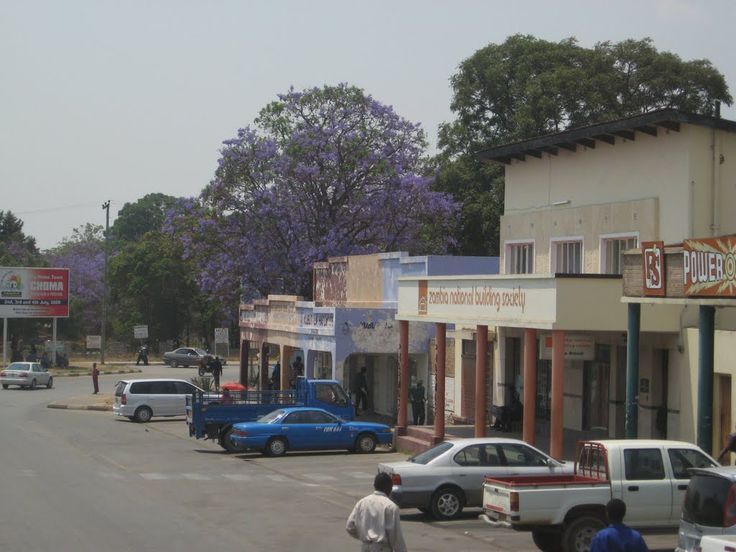
Kapiri Mposhi does not have the visual markers of economic power.
But if you shift your perspective—from what is visible to what is functional—you begin to see its true significance.
It is a connector of flows.
A facilitator of trade.
A coordinator of movement.
It exists at the intersection of systems that sustain the economy.
The Logic of Importance
Why is Kapiri Mposhi important?
Not because it produces the most.
Not because it consumes the most.
Not because it is the largest or the most developed.
It is important because it connects.
And in a world defined by networks, connection is everything.
Without connection, production remains isolated.
Without connection, trade becomes inefficient.
Without connection, economies cannot scale.
Kapiri Mposhi provides that connection.
The Quiet Engine of Trade
In the end, logistics is not about trucks or trains.
It is about flow.
The continuous movement of goods from where they are produced to where they are needed.
Kapiri Mposhi sits within that flow, shaping it without controlling it, enabling it without owning it.
It is part of the machinery that keeps Zambia’s economy moving.
Not loudly.
Not visibly.
But effectively.
There is a tendency to celebrate the visible—the mines, the factories, the markets.
But behind all of that is a system.
A network of connections that makes everything else possible.
Kapiri Mposhi is one of those connections.
A quiet engine.
A logistical anchor.
A place where trade does not begin or end—but where it becomes possible to continue.
And in that role, it holds more power than it ever needs to show.