
The Art of Getting Lost in Zambia

By Derek Mwale
There is a kind of freedom that only exists when you no longer know where you are.
Not lost in the anxious, survival sense—where your heart races and your mind spirals—but lost in the quiet, deliberate surrender of control. The kind of lost that strips away the illusion that you were ever in charge to begin with. The kind that Zambia, in its vast, patient silence, offers without asking.
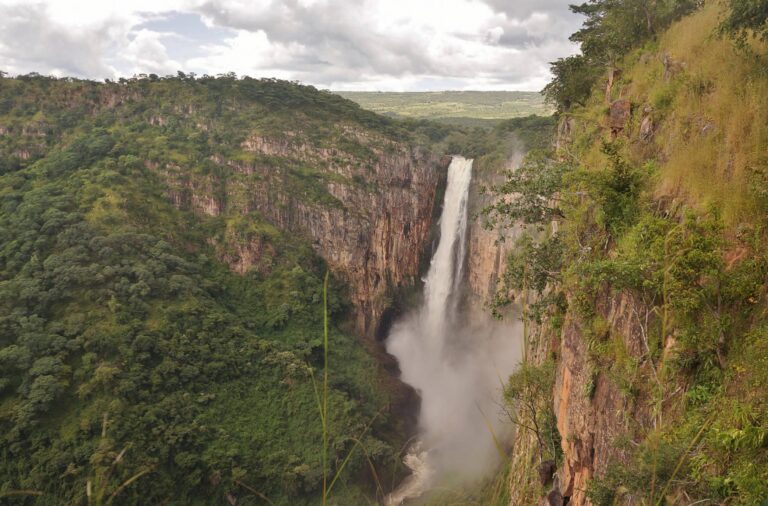
Most people come to Zambia looking for something specific. A waterfall. A safari. A photograph. A story they can package neatly and take home.
But Zambia is not a place that reveals itself to those who arrive with tight itineraries and rigid expectations. It resists that. It stretches beyond your plans. It humbles your sense of direction.
Zambia is not meant to be conquered.
It is meant to be wandered.
The Myth of Knowing Where You’re Going
We are raised to believe that knowing is everything.
Know your path. Know your destination. Know your purpose. Know what comes next.
But there is something deeply flawed in this obsession with certainty. Because certainty, more often than not, is just fear wearing a well-tailored suit.
You plan your trip. You map your routes. You bookmark locations. You tell yourself: I will go here, then here, then here.
But the moment you step onto Zambian soil—truly step into it, beyond the cities and the predictable edges—you begin to feel it slipping.
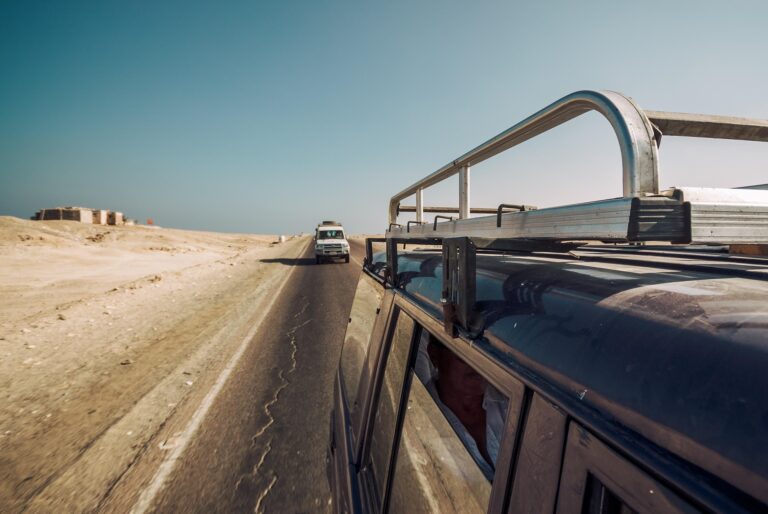
The roads are not always marked the way you expect. The distances stretch longer than Google Maps promised. The landscapes blur into something that feels both endless and intimate.
And somewhere along the way, your plan dissolves.
At first, it frustrates you.
Then, if you allow it, it frees you.
Getting Lost as a Form of Presence
There is a strange clarity that comes from not knowing what’s next.
When you’re lost, you pay attention in a way you never do when you’re certain. Every tree matters. Every turn matters. Every sound becomes a signal.
You stop rushing.
You start seeing.
The burnt orange of the earth under the midday sun. The way the wind moves through tall grass like a quiet conversation. The distant call of birds that sound like they’re echoing from another time.
Zambia has a way of slowing you down—not because it forces you, but because there is no other way to experience it fully.
When you’re lost, you are no longer thinking about the next destination.
You are inside the moment.
And that, more than anything, is what most people are searching for when they travel. Not the place itself, but the feeling of finally being present in their own life.
The Silence That Speaks
There is a kind of silence in Zambia that unsettles people at first.
Not the artificial silence of a muted phone or a quiet room, but a living silence. One that breathes. One that listens back.
In cities, silence is something we avoid. We fill it with noise—music, conversation, endless scrolling—because silence forces us to confront ourselves.
But when you’re out there, truly out there, silence is unavoidable.
And in that silence, something shifts.
You begin to hear your own thoughts more clearly. Not the surface-level chatter, but the deeper currents underneath. The questions you’ve been avoiding. The truths you’ve been postponing.
Getting lost in Zambia is not just a physical experience.
It is a psychological one.
Because without distractions, you are left with nothing but yourself.
And for many people, that is the most unfamiliar territory of all.
The Illusion of Control
We like to believe we are in control of our lives.
That if we plan carefully enough, work hard enough, think strategically enough, everything will unfold exactly as we intend.
But Zambia gently dismantles that illusion.
You can plan for everything, and still find yourself on a road that wasn’t on your map. You can aim for a destination and end up somewhere entirely different.
And yet, more often than not, where you end up is exactly where you needed to be.
There is a lesson in that.
Life, like travel, is unpredictable. The more tightly you try to control it, the more resistance you encounter.
But when you loosen your grip—when you allow for detours, for uncertainty, for the unknown—you begin to experience something deeper than success.
You begin to experience alignment.
The Beauty of the Unplanned
Some of the most memorable moments don’t happen where you intended them to.
They happen in the spaces between.
A random stop by a roadside market where conversations flow effortlessly despite language barriers. A sunset you didn’t plan to see, painting the sky in colors that feel almost unreal. A quiet village where time seems to move differently, slower, more intentionally.
These moments cannot be scheduled.
They cannot be optimized.
They can only be stumbled upon.
And that is the paradox of travel—and of life itself.
The best experiences are rarely the ones you plan for.
They are the ones you allow.
Learning to Trust the Journey
Getting lost requires a certain kind of trust.
Not blind trust, but a grounded confidence that you will find your way, even if you don’t know how or when.
It requires you to let go of the need for constant reassurance. To sit with uncertainty without immediately trying to escape it.
This is not easy.
We are conditioned to seek clarity, to demand answers, to resolve ambiguity as quickly as possible.
But Zambia teaches you to sit with the unknown.
To trust that not knowing is not the same as being lost forever.
Sometimes, it is simply the beginning of a different path.
The Inner Landscape
The longer you stay, the more you realize that getting lost externally mirrors something happening internally.
You begin to question the paths you’ve been following in your own life.
Were they chosen deliberately, or simply inherited?
Are you moving toward something meaningful, or just moving because you were told to?
Zambia doesn’t answer these questions for you.
But it creates the space where those questions can finally surface.
And once they do, it becomes difficult to ignore them.
The Return
Eventually, you find your way back.
Back to a familiar road. Back to a known location. Back to something that resembles direction.
But something has changed.
You carry a different kind of awareness with you. A quieter confidence. A deeper appreciation for uncertainty.
You realize that being lost was never the problem.
The problem was your resistance to it.
Because in those moments of disorientation, you were forced to engage with the world—and with yourself—in a more honest way.
The Art Itself
Getting lost is not an accident.
It is an art.
It requires intention to let go. Courage to step off the familiar path. Patience to sit with discomfort. Awareness to notice what unfolds.
And Zambia, in all its vastness, is the perfect place to practice it.
Not because it is designed for you.
But because it exists entirely on its own terms.
Final Thought
Most people spend their lives trying to find themselves.
Few realize that sometimes, the only way to do that… is to get lost first.
And if there is any place that understands this truth deeply, quietly, and without explanation—
It is Zambia.