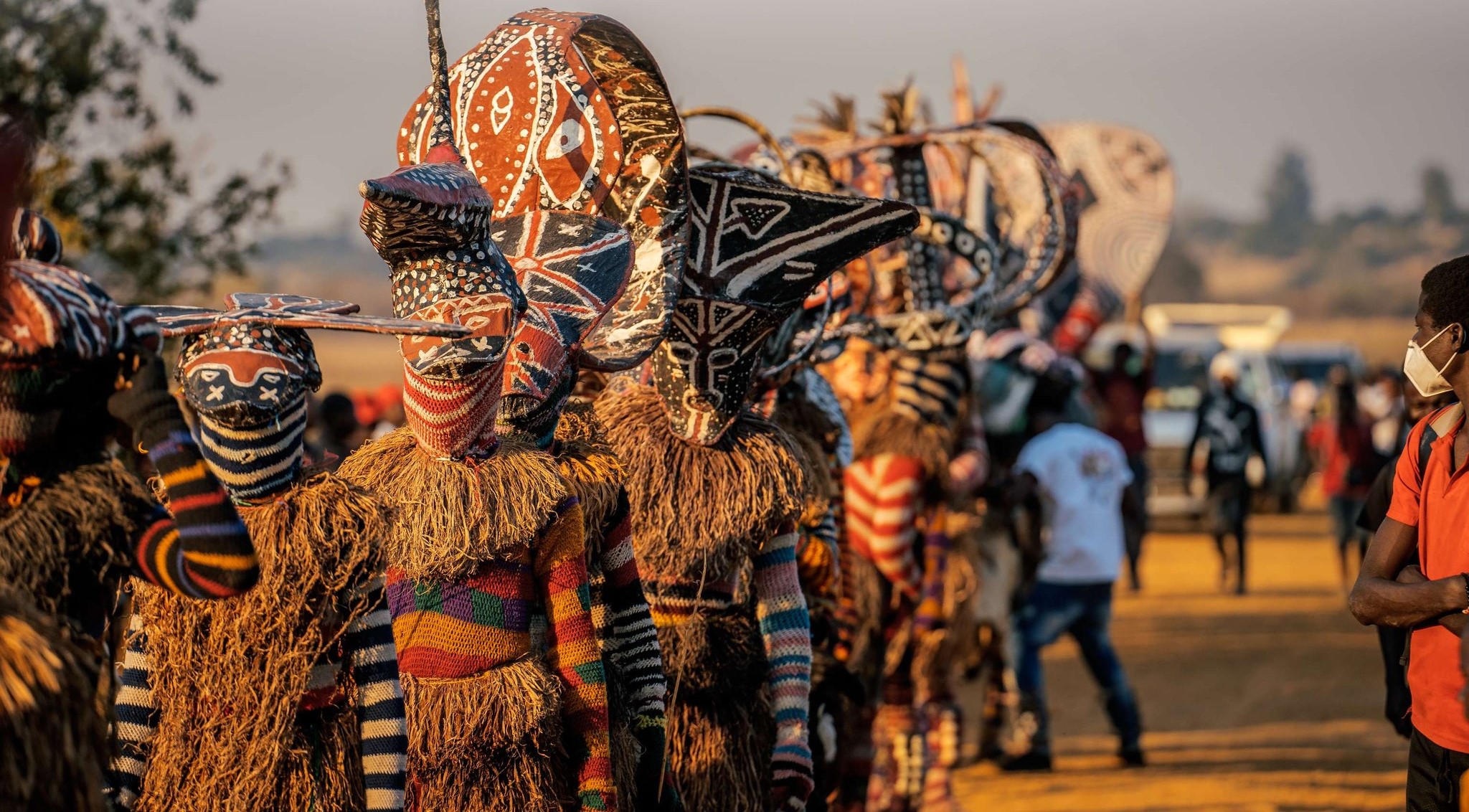
The Soul of Zambia: Culture, Traditions, and Untold Stories

By Derek Mwale
Zambia is not loud.
It doesn’t scream for attention like the neon skylines of the world’s biggest cities. It doesn’t flood your feed with noise. It doesn’t chase you.
Zambia waits.
And when you arrive—when your feet touch its soil, when your lungs fill with its untouched air, when your ears adjust to the rhythm of silence—you begin to understand something deeper:
Zambia is not just a place.
Zambia is a feeling.
Where the Land Breathes Stories
Stand at the edge of Victoria Falls—or as locals call it, Mosi-oa-Tunya, “The Smoke That Thunders”—and you will hear more than water crashing.
You will hear history.
You will hear ancestors.
You will hear a story that began long before maps were drawn, long before borders divided land, long before the modern world tried to define Africa in headlines and hashtags.
Because in Zambia, nature is not separate from culture.
It is culture.
The rivers speak.
The forests remember.
The wind carries voices.
And the people?
They listen.
A Nation of 70+ Stories, One Identity
Zambia is home to over 70 ethnic groups. Seventy languages. Seventy ways of seeing the world.
And yet—one heartbeat.
From the Lozi plains in the west to the Bemba strongholds in the north, from the Tonga valleys to the Ngoni warriors of the east, each tribe holds a piece of Zambia’s soul.
Not in competition.
But in harmony.
You see it in the greetings.
A simple “Muli shani?” is not just a hello—it is an acknowledgment. A recognition. A reminder that you matter.
In Zambia, people don’t rush past each other like shadows.
They pause.
They greet.
They connect.
Because here, humanity is not a concept.
It is a daily practice.
Ceremonies: Where the Past Meets the Present
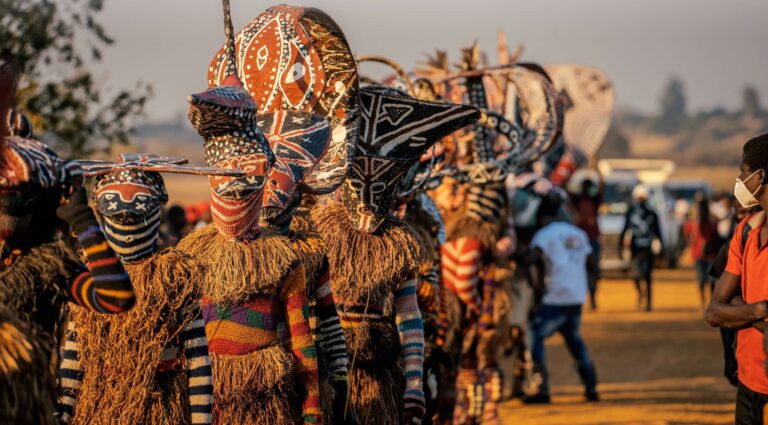
There are moments in Zambia where time bends.
Where the past and present shake hands.
Where tradition steps into the now—and refuses to be forgotten.
Take the Kuomboka Ceremony.
Each year, as the Zambezi floodwaters rise, the Litunga—the Lozi king—moves from the flooded plains to higher ground in a royal barge.
But this is not just a journey.
It is a statement.
A declaration that tradition still lives. That heritage still matters. That identity is not something you abandon—it is something you carry.
Drums echo across the water.
Paddles slice through the river in rhythm.
The air fills with color, pride, and something almost sacred.
And in that moment, you realize:
This is not a performance.
This is a people remembering who they are.
The Unwritten Code of Ubuntu
There is a philosophy that quietly shapes life across Zambia.
It is not written in laws.
It is not taught in classrooms.
But it is everywhere.
Ubuntu.
“I am because we are.”
You feel it when a stranger helps you without expecting anything in return.
When food is shared, even when there is little.
When laughter travels freely between people who just met.
In many parts of the world, success is measured individually.
In Zambia, success is shared.
Your win is our win.
Your struggle is our struggle.
And maybe—that is the secret.
Maybe that is the soul.
Markets, Music, and the Pulse of Everyday Life
Go to a local market in Lusaka, Ndola, or Kitwe.
Not the polished malls.
The real markets.
Where voices rise like music.
Where colors clash in beautiful chaos.
Where life is raw, unfiltered, alive.
Tomatoes stacked like art.
Chitenge fabrics flowing like stories.
Vendors calling out not just to sell—but to connect.
Here, culture is not staged for tourists.
It is lived.
It is in the way a woman ties her headscarf.
In the rhythm of bargaining.
In the laughter that refuses to be silenced by hardship.
And then there is the music.
From traditional drums to modern sounds carried by artists like Chef 187, Zambia’s voice is evolving—but never forgetting its roots.
Because even in the most modern beats, you can still hear the village.
The Stories That Never Made Headlines
The world often tells Africa’s story through a narrow lens.
But Zambia… Zambia holds stories that don’t fit into headlines.
Stories of quiet resilience.
Of communities building with what they have.
Of dreams rising from places the world forgot to look.
A farmer in Eastern Province waking before sunrise, not out of obligation—but purpose.
A young developer in Kitwe building software that could change lives, even with limited resources.
A grandmother passing down wisdom that no book could ever hold.
These are not viral stories.
But they are powerful.
Because they are real.
Respect: The Invisible Foundation
In Zambia, respect is not optional.
It is embedded.
In how children greet elders.
In how conversations are held.
In how disagreements are managed.
Titles matter.
Tone matters.
Presence matters.
Not out of fear—but out of understanding.
An understanding that community only works when people value each other.
And in a world where disrespect has become casual, Zambia feels… different.
Grounded.
Intentional.
Whole.
More Than a Destination
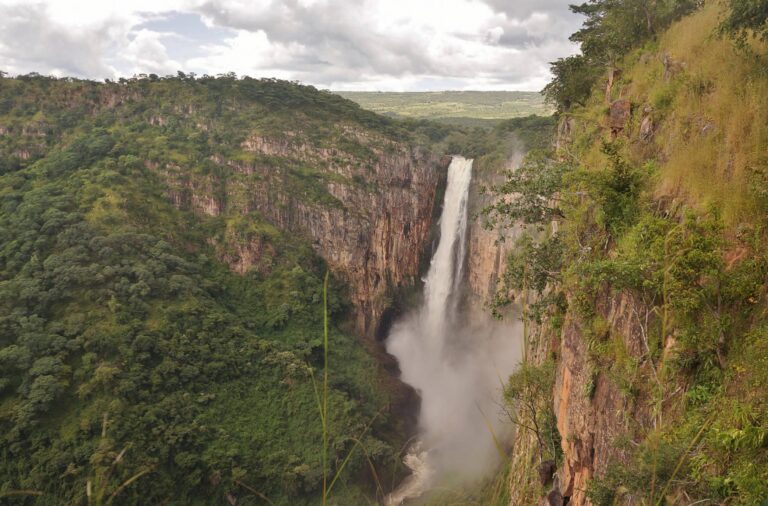
Zambia is often marketed for its safaris, its waterfalls, its untouched landscapes.
And yes—those things are breathtaking.
But they are not the full story.
Because Zambia is not just something you see.
It is something you feel.
It is in the silence of the bush.
In the rhythm of the drums.
In the warmth of a greeting.
In the strength of its people.
It is in the stories that are told—and the ones that are simply lived.
The Soul That Stays With You
You can leave Zambia.
You can board a plane, cross borders, return to the noise of the world.
But Zambia does not leave you.
It stays.
In the way you start greeting people differently.
In the way you begin to slow down.
In the way you start to see connection—not as a luxury, but as a necessity.
Because once you experience a place where humanity still feels… human,
You don’t forget it.
Final Word
Zambia is not trying to be the loudest voice in the room.
It doesn’t need to be.
Because its power is not in volume.
It is in depth.
It is in culture.
In tradition.
In untold stories that continue to unfold every single day.
And if you listen closely—past the noise of the world—
You might just hear it calling.
Not loudly.
But clearly.
Come and feel the soul.