
Street Food in Zambia: A Culinary Adventure

By Derek Mwale
There’s a certain truth you only discover on the street.
Not in restaurants with polished menus. Not in curated travel experiences designed for comfort. But out there — where the dust rises, where charcoal smoke curls into the sky, where conversations happen between strangers who somehow feel familiar.
That’s where Zambia reveals its real flavor.
Street food here isn’t just about eating. It’s about movement. It’s about rhythm. It’s about life happening in real time — unfiltered, unapologetic, and deeply human.
The First Signal: Smoke in the Air
You don’t need directions to find good street food in Zambia.
You follow the smoke.
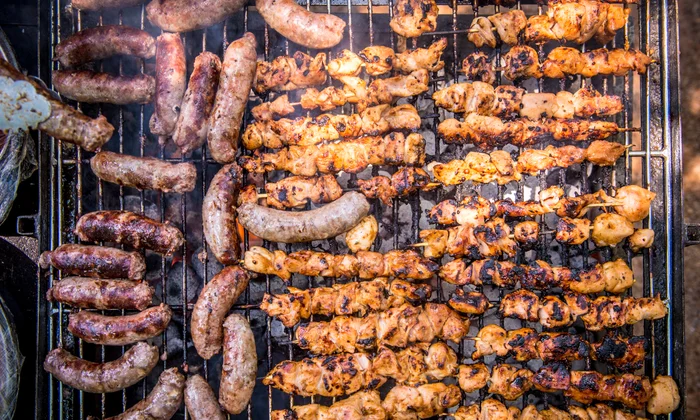
It rises from makeshift grills on busy corners, outside markets, near bus stations, and along roads where life refuses to slow down. That smoke carries a scent that is both invitation and promise — the unmistakable aroma of nyama choma.
Grilled over open charcoal flames, the meat is seasoned simply — salt, sometimes a touch of spice — and left to do what fire does best: transform.
There’s no rush here. The meat cooks slowly, absorbing the heat, the smoke, the moment. When it’s ready, it’s chopped into pieces, served hot, often with a side of nshima or chips.
You don’t just eat nyama choma.
You experience it.
The Rhythm of the Roadside
Zambian street food moves with the country’s pulse.
Early mornings belong to vendors setting up — oil heating in pans, dough being shaped, vegetables laid out with care. By midday, the streets are alive with energy: workers on lunch breaks, students laughing in clusters, taxi drivers leaning against their cars, all drawn to the same thing — quick, affordable, satisfying food.
And then there are the evenings.
That’s when the streets truly come alive.
The air cools, the grills burn brighter, and the conversations deepen. Food becomes more than sustenance; it becomes social currency.
The Comfort Bite: Vitumbuwa
If there’s a smell that defines Zambian mornings and afternoons, it’s the sweet, warm scent of vitumbuwa.
Small, golden, fried dough balls — crispy on the outside, soft and airy on the inside. Slightly sweet, sometimes with a hint of fermentation that gives them character.
They’re sold everywhere. By women balancing trays with effortless grace. By vendors stationed at corners where foot traffic never stops.
You don’t plan to buy vitumbuwa.
You just do.
One becomes two. Two becomes a small paper bag you carry as you walk, sharing with friends or keeping them all to yourself.
No judgment.
The Everyday Luxury: Chips and Chicken
Zambia has mastered the art of making simple food feel like a reward.
Chips — thick-cut, golden, and often fried right in front of you — are paired with grilled or fried chicken in a combination that feels almost universal, yet distinctly local.
There’s something about the way it’s done here.
Maybe it’s the seasoning. Maybe it’s the freshness. Or maybe it’s the environment — eating from a takeaway container while standing under the open sky, watching the world move around you.
It’s not fancy.
But it’s perfect.
The Protein Powerhouses: Street-Side Essentials
Zambian street food doesn’t shy away from bold choices.
You’ll find boiled eggs, often served with a pinch of salt or chili. Simple, filling, effective.
You’ll find sausages sizzling on grills, their skins snapping slightly as they cook, releasing a rich, savory aroma.
And then there’s kapenta — small dried fish, sometimes fried and sold in portions that pack a punch of flavor and nutrition.
These foods are practical. They’re built for energy, for movement, for people who don’t have time to sit but still need to eat well.
The Unexpected Crunch: Seasonal Surprises
Street food in Zambia isn’t static. It changes with the seasons.
During the rainy months, something extraordinary happens.
Ifinkubala — flying termites — emerge, and suddenly, the streets take on a new flavor. Vendors fry or roast them, turning them into crunchy, nutty snacks that are both traditional and deeply rooted in the land.
It’s the kind of food that challenges expectations.
And that’s the point.
Zambian street food doesn’t exist to fit into global norms. It exists to express local truth.
The Sauce Factor: Flavor in the Details
What elevates Zambian street food isn’t just the main dish — it’s what comes with it.
Tomato-based relishes, onion salads, chili sauces — these additions bring balance, heat, and freshness.
They’re often homemade, each vendor having their own subtle twist.
A little more spice here. A touch more acidity there.
These details matter.
Because in street food, flavor isn’t controlled by a recipe book. It’s guided by instinct.
The People Behind the Food
Every plate of street food in Zambia has a face behind it.
A mother funding her children’s education. A young entrepreneur testing a business idea. A family continuing a tradition passed down through generations.
These vendors are not just sellers.
They are storytellers.
Their food carries their history, their hustle, their hope.
And when you buy from them, you’re not just purchasing a meal — you’re participating in a larger story.
The Unwritten Rules
There’s an unspoken etiquette to eating street food in Zambia.
You greet first. Always.
You observe. Watch how others order, how they eat, how they interact.
You trust the process. The busiest stall is usually the best one.
And most importantly, you stay open.
Because street food is unpredictable. It’s not curated for perfection. It’s real.
And real is where the magic lives.
The Deeper Meaning
On the surface, street food is about convenience.
Quick meals. Affordable prices. Easy access.
But beneath that, there’s something deeper.
Street food is a reflection of resilience.
It shows how people create opportunity out of limited resources. How they turn simple ingredients into something meaningful. How they build community in the middle of chaos.
In Zambia, the street is not just a place of transit.
It’s a place of creation.
Final Taste
To explore Zambia through its street food is to step into its heartbeat.
You’ll taste the fire of charcoal grills. The sweetness of fried dough. The richness of local flavors that refuse to be diluted.
But more than that, you’ll feel something.
A connection.
To the people. To the place. To a way of life that values simplicity, authenticity, and presence.
So the next time you find yourself walking down a busy Zambian street, don’t rush past.
Follow the smoke.
Listen to the laughter.
And take a bite.
Because that’s where the real journey begins.