What Zambia Tourism Will Look Like in 2035

By Derek Mwale
There’s a question most people are not asking.
Not because it’s unimportant…
But because the present is loud enough to distract them from the future.
That question is simple:
What will Zambia tourism look like in 10 years?
Not in theory. Not in vague predictions.
But in reality.
Because whether we plan for it or not, 2035 is coming.
And the decisions being made today—what we build, what we ignore, what we invest in—will determine whether Zambia becomes just another destination…
Or something much bigger.
The Current State: Untapped but Unshaped
Right now, Zambia tourism is still in a formative stage.
We have incredible natural assets:
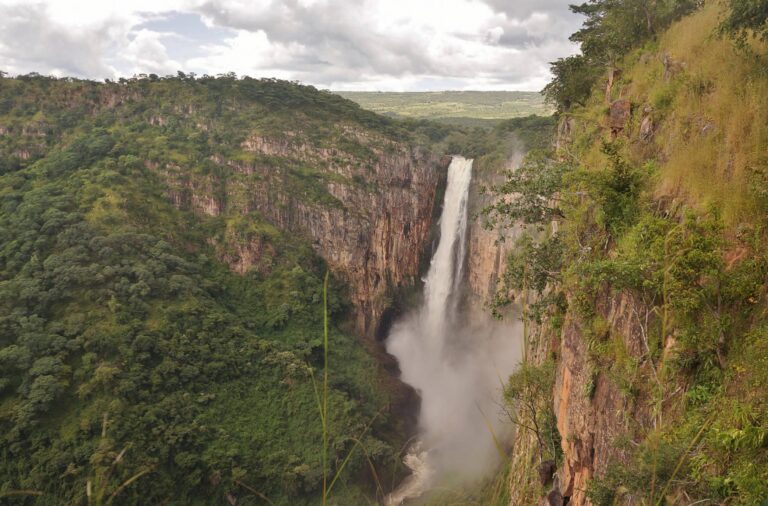
- Waterfalls that rival the world’s best
- Rivers that stretch across landscapes untouched by overdevelopment
- Wildlife ecosystems that still feel raw and authentic
- Cultural depth that hasn’t been fully packaged for global audiences
But here’s the gap:
We have the potential, but not yet the system.
Tourism is still fragmented.
Discovery is inconsistent.
Branding is not unified.
And experiences are often built in isolation rather than as part of a larger ecosystem.
That’s the starting point.
And 2035 will either amplify this fragmentation…
Or transform it into something structured, scalable, and globally competitive.
1. Zambia Will Become a “Experience Economy” Destination
By 2035, tourism will no longer be about simply visiting places.
It will be about experiences.
Visitors will not ask:
“Where should I go?”
They will ask:
“What should I feel?”
And Zambia will respond with curated experiences like:
- Multi-day immersive safaris
- Cultural integration journeys
- Digital detox retreats
- Story-driven travel itineraries
Instead of static packages…
Travel will become dynamic and personalized.
Tourism operators will compete not just on location…
But on experience design.
2. AI-Driven Tourism Infrastructure
Artificial intelligence will quietly become the backbone of tourism operations.
Not visible to the tourist.
But deeply integrated behind the scenes.
By 2035, AI will help:
- Predict tourist flows and seasonal demand
- Optimize pricing in real time
- Personalize itineraries for each visitor
- Recommend destinations based on behavior and preferences
- Improve logistics between lodges, transport, and guides
Tourism platforms will act like intelligent systems rather than static booking websites.
A visitor’s journey will be guided from the moment of interest to the final day of travel.
Seamlessly.
Intelligently.
3. Smart Lodges and Connected Destinations
Lodges in 2035 will not just be places to stay.
They will be smart environments.
Imagine:
- Rooms that adjust automatically to guest preferences
- Energy systems powered by solar and AI optimization
- Digital assistants that guide guests through activities
- Seamless integration between accommodation, transport, and experiences
Even remote areas will feel connected—not through urbanization—but through technology.
Zambia won’t lose its natural identity.
Instead, it will layer intelligence on top of it.
4. Rise of Digital Nomad Ecosystems
As remote work continues to grow globally, Zambia will become part of the digital nomad map.
But not in a generic way.
In a structured way.
By 2035, expect:
- Co-living and co-working hubs in key tourism regions
- Lodges designed for long-term stays
- Communities of remote workers blending travel with productivity
- Visa policies adapted to attract global talent
Tourism will merge with lifestyle.
People won’t just visit Zambia.
They will live and work here temporarily.
And that changes everything.
Because long-term visitors spend more, engage more, and contribute more to local economies.
5. Community-Based Tourism Will Scale
One of Zambia’s biggest untapped strengths is its communities.
By 2035, community-based tourism will likely become a core pillar of the industry.
Not as a side attraction.
But as a primary offering.
Visitors will engage in:
- Local homestays
- Cultural exchanges
- Agricultural experiences
- Guided storytelling from community members
The value will shift from observation to participation.
Tourists won’t just watch culture.
They will experience it alongside the people who live it.
This creates authenticity that cannot be replicated artificially.
6. Zambia as a Premium Yet Accessible Destination
By 2035, Zambia will likely position itself as both:
- A premium destination
- And an accessible one
Luxury tourism will expand with high-end lodges, exclusive safari experiences, and curated packages for global travelers.
At the same time, budget and mid-range tourism will also grow through:
- Affordable travel packages
- Local entrepreneurship
- Scalable transport and accommodation options
This balance is critical.
Because a healthy tourism ecosystem serves multiple income levels without losing identity.
7. Data-Driven Conservation and Sustainable Tourism
Tourism and conservation will become more tightly linked.
By 2035:
- AI and satellite systems will monitor wildlife populations
- Data will guide conservation efforts in real time
- Tourist activity will be managed to reduce environmental impact
- Revenue from tourism will increasingly fund preservation
Visitors will not just consume nature.
They will contribute to its protection.
Tourism will evolve into a system where economic growth and environmental sustainability reinforce each other.
8. Seamless Travel Infrastructure
Transportation within Zambia will improve significantly by 2035.
Expect:
- Better road networks connecting major destinations
- More efficient domestic flight options
- Integrated booking systems for multi-location travel
- Digital navigation and travel coordination tools
Travel between destinations will become smoother and more predictable.
Reducing friction will increase overall visitor satisfaction.
9. Zambia’s Tourism Brand Will Be Redefined
Right now, Zambia’s global tourism identity is still developing.
By 2035, it will likely evolve into a clearer narrative.
Not just “safaris” or “waterfalls”…
But something more distinct.
A combination of:
- Raw natural beauty
- Authentic cultural experiences
- Peaceful environments
- Emerging modern infrastructure
The challenge—and opportunity—will be to tell a unified story to the world.
A story that positions Zambia not as an alternative…
But as a destination of choice.
10. Content Will Drive Tourism More Than Marketing
By 2035, traditional marketing will matter less.
Content will matter more.
Travel decisions will be influenced by:
- Social media creators
- Documentaries
- User-generated experiences
- Viral storytelling
A single video can inspire thousands of visits.
This means tourism brands, destinations, and even communities will need to think like media creators.
Those who understand storytelling will have a major advantage.
The Role of Local Entrepreneurs
One of the most important shifts by 2035 will be the rise of local tourism entrepreneurs.
Individuals who:
- Build niche travel experiences
- Create platforms that connect travelers to local services
- Develop content-driven travel brands
- Innovate in logistics, booking, and experiences
The future of tourism will not be controlled solely by large corporations.
It will be shaped by agile, creative individuals who understand both technology and storytelling.
The Risks If Nothing Changes
Not all futures are guaranteed.
If Zambia does not invest in infrastructure, branding, and innovation…
It risks:
- Remaining under-discovered
- Losing potential revenue to competing destinations
- Missing the digital transformation wave
- Failing to capture the digital nomad and experience economy markets
The difference between success and stagnation will come down to execution.
Ideas alone are not enough.
Final Thought
Zambia in 2035 is not predetermined.
It is being built right now.
Quietly.
Through decisions made by policymakers, entrepreneurs, creators, and communities.
Tourism will not just be about attracting visitors.
It will be about designing experiences that people remember for life.
If Zambia gets this right…
It won’t just be known for its landscapes.
It will be known for its experiences, its people, its innovation, and its ability to blend nature with the future.
And maybe the real question is not:
“What will Zambia tourism look like in 2035?”
But rather:
What are we doing today to make that future possible?