
A Food Lover’s Guide to Zambian Cuisine

By Derek Mwale
There’s a certain kind of silence that falls over a table when the food is right.
Not the awkward kind. Not the kind filled with scrolling phones and half-hearted conversation. I mean the kind of silence that signals arrival — when the body, the spirit, and memory all agree: this is home.
Zambian cuisine does that.
It doesn’t scream for attention like global fast food chains or dress itself in complicated techniques. It doesn’t try to impress you. Instead, it welcomes you. Slowly. Deeply. With warmth that lingers longer than the meal itself.
To understand Zambia, you don’t start with its skyline or its GDP. You start with its food.
The Heartbeat: Nshima
Every story begins with nshima.
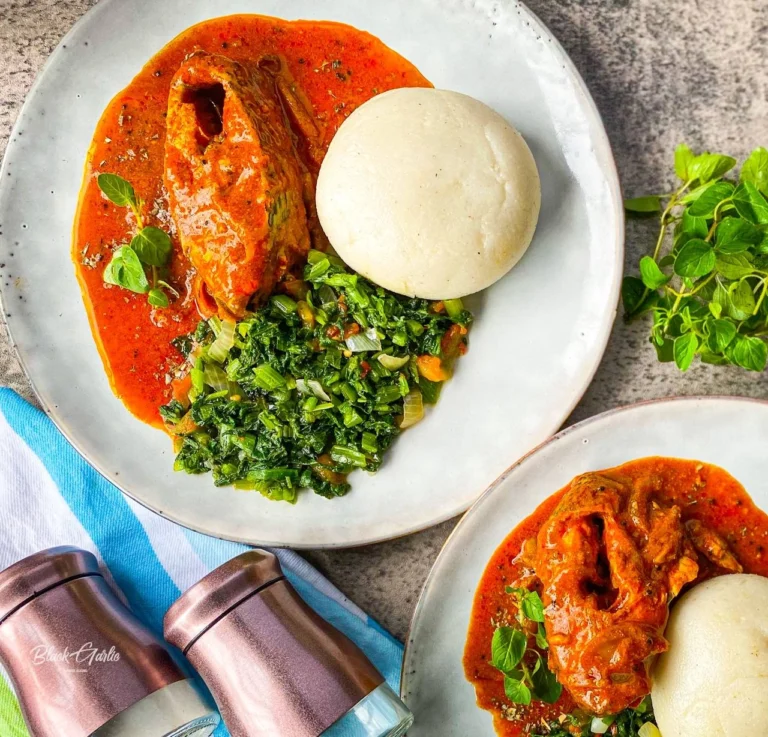
White, soft, and deceptively simple, nshima is more than a staple — it is identity. Made from finely ground maize meal, stirred patiently into boiling water until it forms a thick, smooth consistency, nshima is eaten with the hands, shaped into small portions, and used to scoop up relishes.
But here’s the thing: nshima alone is not the meal. It’s the foundation — the stage upon which flavor performs.
In many Zambian homes, the question is never “Are we eating nshima?”
It’s “What are we having with nshima?”
The Soul: Relishes (Ifisashi, Ndiwo, Umunani)
This is where Zambia reveals its depth.
Relishes — or ndiwo — are the soul companions of nshima. And they vary wildly depending on region, season, and household creativity.
Ifisashi is perhaps the most beloved. A rich, peanut-based dish often cooked with leafy greens like pumpkin leaves or cassava leaves, it balances earthiness with a subtle nutty sweetness. It’s comfort food in its purest form.
Then there’s chibwabwa (pumpkin leaves), cooked down until tender and often enriched with groundnuts. It tastes like the land after rain — fresh, grounding, alive.
For protein, Zambians turn to beef, chicken, kapenta (small dried fish), or fresh fish like bream from the country’s rivers and lakes. Stewed slowly with tomatoes, onions, and spices, these dishes don’t rush you. They unfold.
Each bite feels like a conversation with generations before you.
The Wild Side: Traditional Delicacies
Zambian cuisine isn’t afraid of authenticity.
For the adventurous, there’s ifinkubala — flying termites, harvested during the rainy season. Fried or lightly roasted, they’re crunchy, nutty, and surprisingly addictive. They aren’t just food; they’re seasonal events, bringing communities together in harvest and celebration.
Then you have mopane worms, rich in protein and flavor, often dried and later cooked in a tomato-based sauce. They tell a story of survival, adaptation, and respect for nature.
Food here isn’t just consumption. It’s relationship — with the land, with the seasons, with each other.
The Street Pulse: Fast Food, Zambian Style
Step into the streets of Lusaka, Ndola, or Kitwe, and you’ll find a different rhythm.
Here, the air is filled with the scent of grilled meat — nyama choma sizzling over open flames. Chunks of beef, goat, or chicken, seasoned simply and cooked over charcoal, served with a side of nshima or chips.
It’s raw. It’s honest. It’s unforgettable.
Then there are vitumbuwa — small fried dough balls, crispy on the outside, soft on the inside. Sold by roadside vendors, they’re the kind of snack you didn’t plan to buy but end up craving long after.
Street food in Zambia isn’t just convenient. It’s alive. It’s conversation. It’s community in motion.
The Freshness: Farm-to-Table, Naturally
Long before “organic” became a global buzzword, Zambia was already living it.
Most ingredients are locally sourced. Vegetables are fresh from the garden. Fish comes straight from the water. Even the groundnuts are often hand-processed.
There’s a purity here that you can taste.
Tomatoes actually taste like tomatoes. Greens carry the bitterness and sweetness of the soil. There’s no need for artificial enhancement because the ingredients speak for themselves.
And maybe that’s the lesson: real food doesn’t need to shout.
The Ritual: Eating Together
In Zambia, meals are rarely solitary.
There’s a communal nature to eating — families gathered around a shared dish, laughter echoing between bites, stories passed down alongside recipes.
Eating with your hands isn’t just tradition. It’s connection. You feel the food. You engage with it. You slow down.
And in that slowing down, something powerful happens: you become present.
The Evolution: Modern Twists on Tradition
Zambian cuisine is not stuck in the past. It’s evolving.
Across urban centers, chefs and home cooks alike are reimagining traditional dishes. Nshima is being paired with global flavors. Ifisashi is finding its way into modern plating styles. Local ingredients are being fused with international techniques.
But the core remains untouched.
Because no matter how modern the presentation becomes, the essence of Zambian food is rooted in something timeless: authenticity.
The Hidden Truth About Zambian Food
Here’s what most people get wrong.
They think Zambian cuisine is simple.
And on the surface, it is. The ingredients are humble. The techniques are straightforward. There are no unnecessary complications.
But simplicity is not the absence of depth. It is the refinement of it.
Zambian food doesn’t overwhelm you. It grounds you.
It reminds you that food is not just about taste — it’s about memory, identity, and belonging.
Final Bite
If you ever find yourself in Zambia, don’t rush through the experience.
Sit down. Eat slowly. Use your hands. Ask questions. Listen to the stories behind the dishes.
Because in every plate of nshima, in every spoonful of ifisashi, in every bite of nyama choma — there is a piece of Zambia waiting to be understood.
And if you pay attention, really pay attention, you’ll realize something:
You’re not just eating food.
You’re tasting a way of life.