Why Choma Is One of Zambia’s Most Underrated Towns

By Derek Mwale
When people talk about Zambia’s most important towns, the conversation usually revolves around Lusaka, Ndola, Kitwe, Livingstone, maybe Solwezi if mining money enters the discussion. Choma rarely gets mentioned with the same energy. It exists quietly in the background of national conversations — calm, agricultural, slow-moving to outsiders.
But that silence hides something powerful.
Because Choma is one of the few towns in Zambia that still feels real.
Not “real” in the romanticized social media sense where people suddenly pretend rural life is aesthetic after discovering film cameras and country music playlists. Real in the sense that life there still has identity. There is space to think. Space to build. Space to breathe. Space to dream without drowning in noise.
And that’s exactly why Choma is underrated.
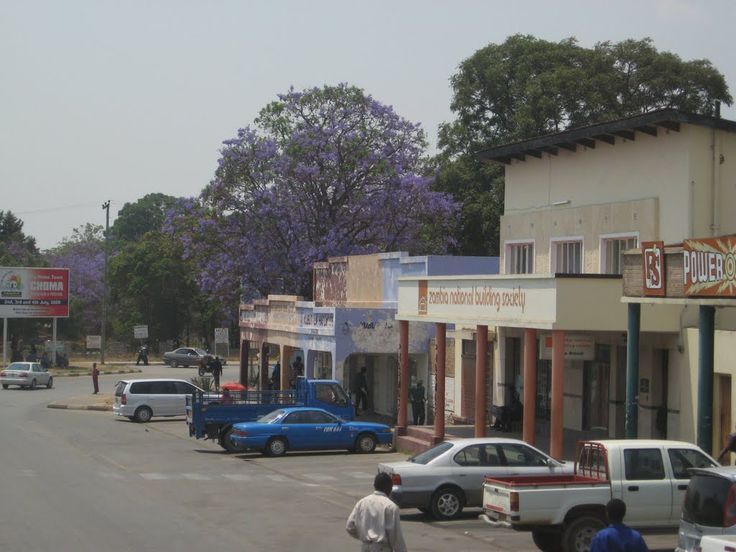
Most people only know Choma as a stopover town on the road to Livingstone. Somewhere buses pass through. Somewhere you buy a drink, stretch your legs, then continue the journey. But if you actually stay long enough to observe the town, you begin to notice something different.
Choma has potential that people underestimate because it doesn’t scream for attention.
The town moves with quiet confidence.
Unlike overcrowded cities where everyone is competing to appear important, Choma still carries a grounded energy. People know each other. Businesses grow slower but more authentically. Conversations still matter. Community still matters.
That alone is becoming rare.
Modern cities are beginning to feel emotionally expensive. Everything is fast. Everyone is trying to monetize everything. Social media has turned identity into performance. People are exhausted before they even begin chasing their dreams.
But towns like Choma still hold something cities are losing:
human rhythm.
You can feel it in the mornings. The roads aren’t drowning in chaos. The air feels different. The pressure levels are different. Life doesn’t feel like a constant emergency.
That environment matters more than people realize.
Because creativity, innovation, and long-term thinking often grow better in places where the mind can actually hear itself.
And this is where people misunderstand Choma.
They think development only looks like skyscrapers, traffic, malls, and noise. But the future of Africa may not belong only to giant cities. It may belong to towns that still have room to evolve intelligently.
Choma has that room.
Agriculture already gives the town economic importance, but what becomes interesting is what happens when agriculture meets technology, media, logistics, and youth entrepreneurship.
That combination could completely change the town over the next decade.
Across Africa, a silent shift is happening. Young people are starting to realize they do not necessarily need to migrate to overcrowded capitals to build meaningful businesses anymore. Internet access is changing geography itself.
A creator can build a global audience from Choma.
A programmer can launch software from Choma.
A media company can start from Choma.
An online business can scale from Choma.
That changes everything.
For decades, opportunity in Africa has been concentrated into a few urban centers. But technology is decentralizing opportunity. Suddenly, smaller towns are no longer disconnected from the world.
And Choma is positioned perfectly for that shift.
The town has enough infrastructure to grow, but still enough openness to shape its identity properly before uncontrolled expansion arrives.
That balance is powerful.
Because once cities become too crowded and too expensive, innovation slows down. Young people spend more energy surviving than building. Rent increases. Transportation costs rise. Mental exhaustion rises. Creative risk-taking decreases.
Smaller towns quietly become the next frontier.
And the smartest builders are beginning to notice.
What makes Choma interesting is that it doesn’t feel over-engineered yet. There is still authenticity in the environment. You can still imagine possibilities there. That imagination disappears in many cities because everything already feels locked into rigid systems.
In Choma, the future still feels editable.
You can imagine better roads.
Better creative spaces.
Better tech communities.
Better youth culture.
Better local media.
Better tourism experiences.
Better businesses.
The town feels like unfinished potential.
And unfinished potential is one of the most valuable things in the world.
Because once a place becomes fully commercialized, authenticity often dies.
Look at many major cities globally. They became successful economically but emotionally hollow. Every street begins to look the same. Every mall feels identical. Every business copies global trends until local identity disappears.
Choma still has identity.
And identity matters.
The future belongs to places that can modernize without losing soul.
That’s why culture matters too.
Southern Province already carries strong cultural depth, and Choma sits within that energy. Traditions still exist there naturally instead of being artificially revived for tourism campaigns. There’s pride in community. Pride in language. Pride in heritage.
That creates social stability many places are losing.
And stability matters for growth.
People underestimate how much emotional environment affects economic progress. Places where communities completely collapse socially often struggle to sustain meaningful development. Distrust rises. Isolation rises. Everyone becomes individually survival-focused.
But places with stronger community foundations adapt differently.
Choma still feels connected to itself.
Even the pace of life there teaches something important.
Not everything valuable needs immediate validation.
Modern internet culture has trained people to think success must look loud. Fast followers. Fast money. Fast attention. Fast virality.
But sustainable growth is often quieter.
Choma reflects that energy.
The town isn’t trying to cosplay as Dubai.
It isn’t desperately chasing artificial modernity.
It still feels grounded in Zambia.
And honestly, Zambia needs more places like that.
Because development should not mean abandoning identity.
Africa’s future becomes dangerous if every town tries to become a copy of somewhere else. Real power comes from building modern African environments that still feel African.
Choma has the chance to do that properly.
Imagine a future where:
- agriculture becomes smart-tech driven,
- local creators build global audiences,
- tourism expands authentically,
- internet entrepreneurship rises,
- local manufacturing grows,
- media platforms emerge,
- and youth innovation hubs develop organically.
That future is possible.
And the interesting part is that smaller towns often adapt faster once momentum starts. Large cities carry too much bureaucracy, congestion, and systemic pressure. Smaller towns can pivot more efficiently if investment and vision align.
But vision is the key word.
Places do not become important accidentally.
People must imagine bigger futures for them first.
That’s the psychological stage Choma is entering now.
You can feel it quietly.
Young people are beginning to think differently.
Technology is spreading.
Digital culture is spreading.
Business knowledge is spreading.
Global awareness is spreading.
The next generation growing up in towns like Choma will think far beyond traditional limitations.
And once mindset changes, everything changes.
Because the biggest limitation in many African towns was never intelligence.
It was exposure.
The internet destroyed that barrier.
Now a teenager in Choma can study AI online.
Learn filmmaking online.
Build apps online.
Start an online brand.
Launch a YouTube channel.
Sell digital services internationally.
That level of access would have sounded impossible twenty years ago.
But now it’s normal.
Which means the next breakout African company, creator, or movement may not come from where people expect.
It may come from places everyone ignored.
Places like Choma.
And maybe that’s the advantage.
Because underrated places move differently.
There’s less pressure to conform.
Less noise.
Less distraction.
Less performance.
Sometimes greatness grows better in overlooked environments.
That applies to people too.
Some of the most dangerous innovators in history came from places nobody respected initially. Being underestimated creates hunger. It creates observation. It creates resilience.
Choma carries some of that energy.
Quietly.
Not loudly.
And maybe that’s why the town feels important beyond economics alone.
It represents a different version of African progress.
A version where development doesn’t require losing identity.
Where growth can still feel human.
Where technology and tradition can coexist.
Where ambition can rise without destroying community.
That balance is rare.
Very rare.
Most people driving through Choma will never notice any of this.
They will see an ordinary town.
But history has a pattern:
the world often overlooks important places before transformation happens.
And when people finally notice, they usually think the success appeared suddenly.
It never does.
The foundations are always there first.
Quietly building underneath the surface.
Just like Choma.