
Meet the People Who Call the Wild Home

By Derek Mwale
There are places in the world where nature is something you visit.
You book it.
You photograph it.
You leave it.
And then… there is Zambia.
Here, the wild is not a destination.
It is home.
Where Civilization Fades and Life Begins
Drive deep into the heart of South Luangwa National Park and something begins to change.
The roads thin out.
The signal disappears.
The noise of the modern world dissolves into dust.
And then—silence.
Not empty silence.
Alive silence.
The kind filled with distant lion calls, rustling leaves, and the slow, steady rhythm of a land that has never needed permission to exist.
This is where you meet them.
The people who call the wild home.
The Guides: Translators of the Untamed
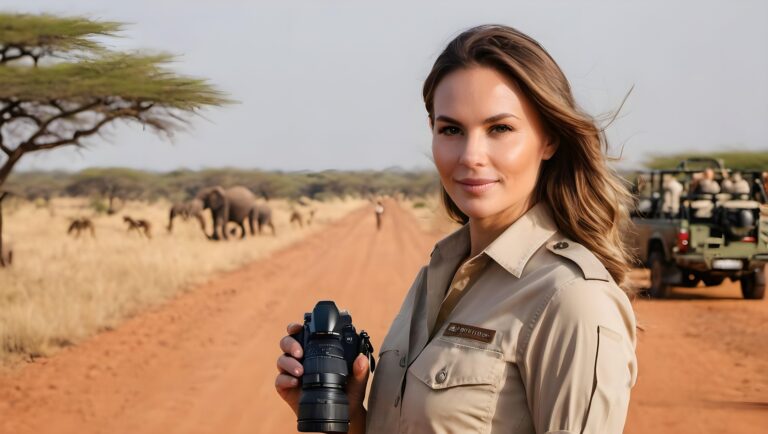
Before you ever see a leopard draped over a tree branch or a herd of elephants moving like ancient spirits through the bush, there is someone walking quietly ahead of you.
Watching.
Listening.
Reading the earth like a book.
These are Zambia’s legendary safari guides.
Men and women trained not just in conservation, but in intuition.
They don’t just see tracks.
They understand them.
A bent blade of grass.
A faint footprint in the sand.
A broken twig pointing in a direction you would never notice.
To you, it’s nothing.
To them, it’s a story.
“Two lions passed here last night,” they might say calmly.
And suddenly, the ground beneath your feet feels alive.
Guides in places like Lower Zambezi National Park are more than tour leaders.
They are translators.
Bridging two worlds:
The human—and the wild.
The Rangers: Guardians of a Fragile Kingdom
But not everyone in the wild is there for wonder.
Some are there for war.
A quiet war.
Against poaching.
Against extinction.
Against the slow erasure of life that cannot defend itself.
Zambia’s wildlife rangers wake before dawn.
They patrol vast lands under the same sun that burns tourists’ cameras, under the same stars that light up romantic safari nights.
But their reality is different.
They walk for miles.
They track threats you will never see.
They stand between animals and a world that too often values profit over preservation.
Organizations like Zambia Wildlife Authority have long been part of this mission, protecting ecosystems that don’t have a voice.
And yet, the rangers remain mostly invisible.
No headlines.
No applause.
Just duty.
Because for them, the wild is not scenery.
It is responsibility.
The Villages at the Edge of Wilderness
Step beyond the parks, and you will find communities living on the edge of something extraordinary.
Villages where the boundary between human and wild is not marked by fences—but by understanding.
In parts of the Luangwa Valley, elephants are not rare sightings.
They are neighbors.
Unpredictable.
Powerful.
Respected.
A farmer may wake up to find his crops disturbed by a passing herd.
Frustration is natural.
But so is restraint.
Because here, people understand something many have forgotten:
The land does not belong to us.
We belong to the land.
Children grow up knowing the calls of birds before they learn to read.
They understand seasons not from calendars—but from the behavior of animals, the movement of clouds, the smell of the air before rain.
This is knowledge no school can fully teach.
This is survival.
The Fishermen of the Great Rivers
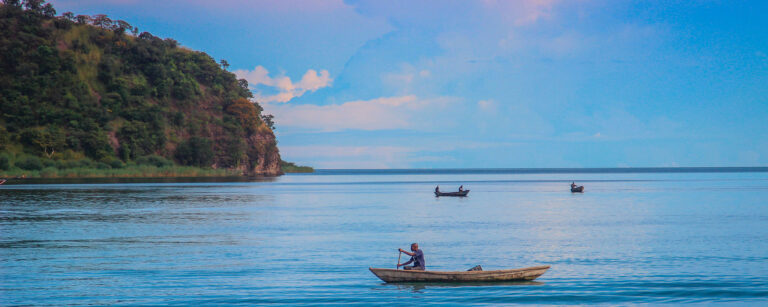
Follow the flow of the Zambezi River, and you will meet another kind of wild resident.
The fishermen.
Men who rise before sunrise, pushing their boats into waters that hold both life and danger.
The river is generous.
But it is also unforgiving.
Beneath its surface lie currents strong enough to swallow a man whole.
Crocodiles that wait with ancient patience.
Hippos—silent, territorial, and more dangerous than they appear.
And yet, every day, the fishermen return.
Not out of recklessness.
But necessity.
The river feeds families.
It sustains communities.
It shapes identity.
Watch a fisherman cast his net, and you will see something poetic.
A dance between man and nature.
A trust that is never blind—but always brave.
The Women: Silent Pillars of the Wild
Too often, their stories go untold.
But in the villages, in the markets, in the spaces between survival and growth—you will find them.
Women who carry the weight of life with a strength that doesn’t need recognition.
They gather firewood from lands where predators roam.
They fetch water from rivers that demand respect.
They raise children in environments that require resilience from an early age.
And still—they laugh.
Still—they sing.
Still—they build.
Their connection to the wild is not romantic.
It is real.
It is daily.
It is powerful.
Children of the Wild
And then… there are the children.
Barefoot.
Bright-eyed.
Unafraid.
They run through paths that would make outsiders cautious.
They climb trees with the ease of creatures born to belong.
To them, the wild is not something to fear.
It is something to understand.
A boy might point out animal tracks before you even notice them.
A girl might identify bird calls like a language she’s always known.
They are growing up in a world where nature is not a concept.
It is a teacher.
And in their laughter, in their curiosity, you see the future of Zambia’s wild.
Living Without Illusion
To call the wild home is not easy.
There is no illusion here.
No curated experience.
No guarantees.
The wild gives—but it also takes.
Droughts come.
Animals wander.
Challenges rise without warning.
But the people who live here have learned something powerful:
You do not conquer nature.
You coexist with it.
And in that coexistence, there is a kind of peace that modern life rarely offers.
More Than Survival
It would be easy to frame these lives as struggle.
To reduce them to hardship.
But that would miss the truth.
Because beyond survival—there is pride.
Pride in knowing the land.
In understanding its rhythms.
In living a life that is deeply connected to something real.
In a world increasingly driven by screens, algorithms, and artificial experiences, these communities remain grounded.
Not behind.
Grounded.
There is a difference.
The Wild Is Not Empty
To outsiders, the wild can feel empty.
Just trees.
Just animals.
Just space.
But that is because they are not looking closely.
Because the wild is full.
Full of stories.
Full of lives.
Full of people who wake up every day in a world that many only dream of experiencing.
And these people—they are not separate from the wild.
They are part of it.
Final Word
To meet the people who call the wild home is to understand Zambia in its purest form.
Not through brochures.
Not through curated tours.
But through real lives.
Real connections.
Real stories.
It is to see a different way of existing.
One where nature is not a backdrop—but a partner.
One where life is not rushed—but lived.
One where the wild is not something you escape to…
But something you belong to.
And once you see it—truly see it—
You realize something quietly profound:
The wild was never empty.
We were just too busy to notice.