
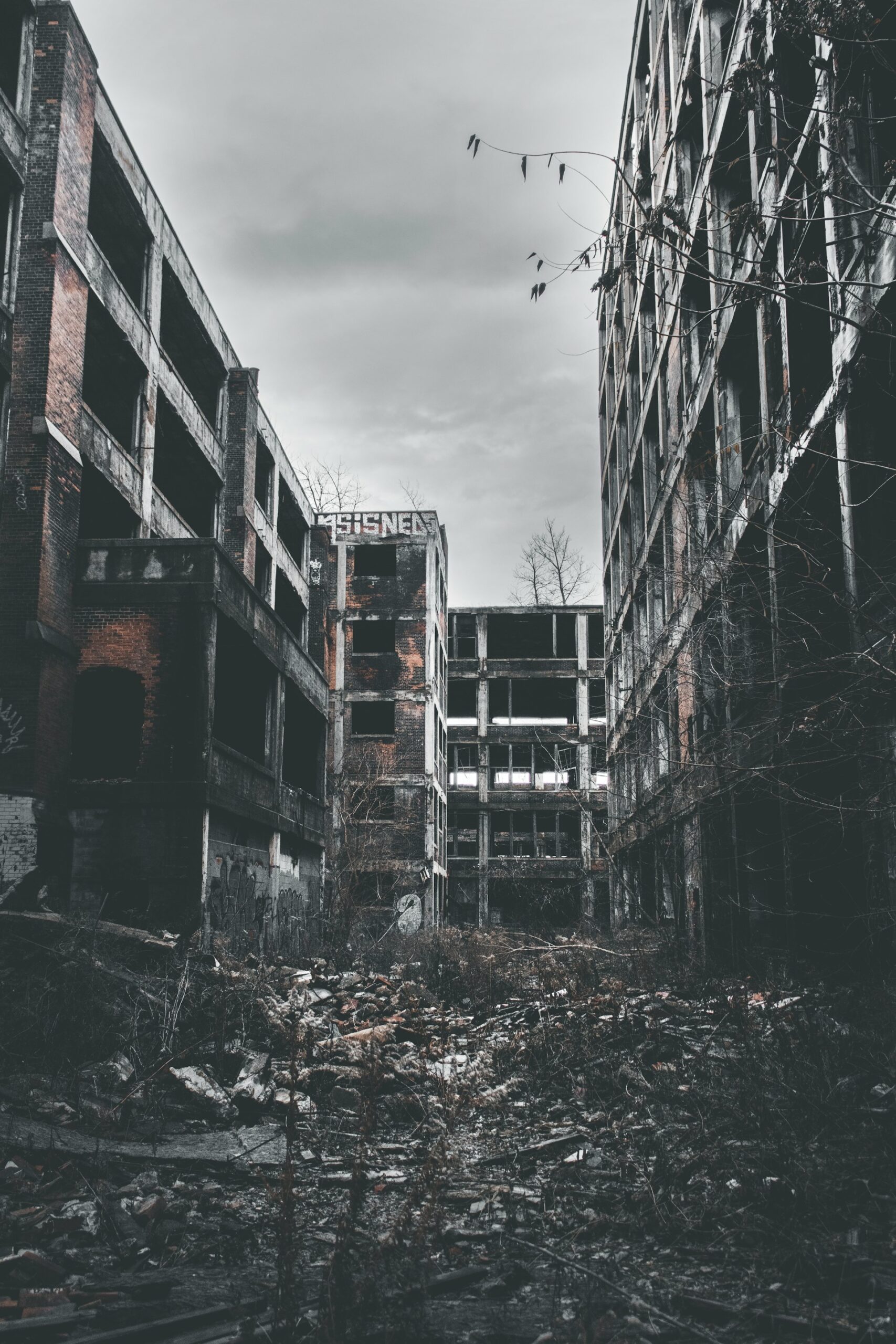
Abandoned Buildings in Zambia With Untold Stories

By Derek Mwale
There’s something unsettling about an abandoned building.
Not the obvious kind of unsettling — not ghosts or horror-movie shadows — but something quieter. Something heavier. A feeling that life used to be here… and then suddenly, it wasn’t.
Zambia is full of these places.
Not the kind you see on postcards. Not the kind tourism boards talk about. These are the forgotten structures sitting just off the main road, behind overgrown grass, beyond rusted gates, inside towns that used to move faster than they do now.
And if you look closely — really closely — you begin to realize something:
Abandoned buildings are not empty.
They are full of unfinished stories.
The Buildings That Time Didn’t Close — People Did
We like to believe that things end naturally.
A business shuts down because it failed.
A house empties because people moved on.
A factory stops because demand disappeared.
But that’s not how it usually works here.
In Zambia, buildings don’t die from old age.
They die from interruption.
A mining contract collapses.
A funding pipeline disappears.
A political shift redirects resources.
A road gets built somewhere else.
And suddenly — a place that was alive on Friday becomes silent by Monday.
No ceremony. No closure.
Just… stillness.
The Hotel That Never Hosted Its Guests
Drive through certain parts of the Copperbelt, and you’ll find them — half-finished hotels.
Tall. Ambitious. Almost proud.
You can tell what they were meant to be: tiled lobbies, balconies facing sunsets, reception areas designed for people who never arrived.
Someone once stood there with a vision:
Tourists will come.
Business will grow.
This will be the next big thing.
And for a moment, it probably felt inevitable.
But something happened.
Funding slowed.
Costs rose.
Momentum disappeared.
And now?
The building stands like a sentence that was never finished.
If you walk through it, you’ll notice something strange — it doesn’t feel like a failure.
It feels like a pause.
Schools That Taught Dreams — Briefly
There are abandoned schools scattered across rural Zambia.
You’ll find broken desks, chalkboards still carrying faint writing, walls that once echoed with voices.
These places tell a different kind of story.
Not ambition — but hope.
Someone believed education would reach here.
Someone believed children would come.
Someone believed continuity was guaranteed.
And for a while, it worked.
Kids showed up.
Lessons happened.
Dreams began forming.
Then something shifted.
Teachers left.
Funding stopped.
Communities moved.
And the building remained — holding onto the echo of what it used to be.
If you stand inside one of these classrooms long enough, you start to feel it:
Not abandonment.
Interruption.
The Factories That Powered Entire Towns
Some of the most powerful abandoned structures are old industrial sites.
Factories. Warehouses. Processing plants.
These are not small buildings.
They were once the heartbeat of entire communities.
People woke up because of them.
Families ate because of them.
Towns existed because of them.
Then one day, the machines stopped.
And when machines stop, everything else follows.
Shops close.
Transport slows.
People leave.
What remains is a shell — massive, quiet, and almost impossible to ignore.
If you walk through one of these spaces, you’ll notice how big it feels.
Not physically.
But historically.
You’re not just walking through a building.
You’re walking through a collapsed ecosystem.
Houses That Still Feel Occupied
Some abandoned homes feel different.
They don’t feel empty.
They feel… paused.
Curtains still hanging.
Furniture still placed.
Objects left exactly where someone last touched them.
It’s as if the people didn’t leave permanently — they just stepped out and never came back.
These are the most haunting spaces.
Because they remind you that life doesn’t always end cleanly.
Sometimes, it just stops mid-sentence.
Why Zambia Has So Many Untold Structures
There’s a pattern beneath all this.
Zambia is a country of potential.
And potential creates something dangerous:
Overextension.
We build for the future — but the future doesn’t always arrive on schedule.
We invest in growth — but growth depends on fragile systems.
We assume continuity — but continuity is not guaranteed.
So buildings rise ahead of their time.
And when reality fails to catch up, they stay behind.
Frozen between what was imagined and what actually happened.
The Real Story Isn’t Abandonment — It’s Visibility
Here’s the deeper truth:
These buildings are not just physical structures.
They are invisible lessons.
Most people drive past them without thinking.
But if you pay attention, they reveal something powerful:
Opportunity doesn’t disappear. It becomes invisible.
A half-built hotel is not just a failed project — it’s an unfinished opportunity.
An abandoned school is not just a closed institution — it’s a gap waiting to be filled.
An empty factory is not just a relic — it’s infrastructure waiting for a new purpose.
The problem is not that Zambia lacks opportunity.
The problem is that opportunity often hides inside what looks like failure.
What If These Buildings Are Not Dead?
This is where the perspective shifts.
What if these places are not the end of something…
…but the beginning of something else?
Think about it:
- A vacant hotel could become a co-living tech hub
- An abandoned school could become a community innovation center
- A dead factory could become a startup manufacturing space
The structure is already there.
The story just needs a new chapter.
The Psychology of Ignored Assets
There’s a reason most people don’t act on these opportunities.
It’s not lack of intelligence.
It’s perception.
We are trained to chase what looks successful.
Shiny buildings. Active businesses. Visible growth.
But the real leverage often exists in overlooked spaces.
Places where others stopped looking.
Places where the story feels “over.”
Because that’s where competition disappears.
Walking Through Silence
If you ever get the chance, walk into one of these buildings.
Not as a tourist.
But as an observer.
Notice the details:
The way light enters through broken windows.
The way dust settles on surfaces that once mattered.
The way silence feels… structured.
And ask yourself one question:
What was this place trying to become?
Because that question matters more than what it used to be.
Zambia’s Hidden Blueprint
These abandoned buildings are not random.
They are a blueprint.
A map of ambition, risk, interruption, and possibility.
They show you:
Where people believed in growth
Where systems failed
Where momentum collapsed
Where opportunity still exists
If you study them carefully, you begin to see patterns.
And once you see patterns…
You can predict where the next opportunity will appear.
The Final Thought
Most people see abandoned buildings and think:
“Nothing is here.”
But that’s the wrong lens.
Because in Zambia — and in many places like it — abandoned doesn’t mean empty.
It means:
- paused ambition
- interrupted progress
- hidden opportunity
The stories are not gone.
They are just waiting for someone to continue them.
And maybe that’s the real question:
Not why these buildings were abandoned…
…but who is going to be bold enough to rewrite their ending.